Non-meditation as meditation
One of the most distinctive teachings of Dzogchen is that true meditation is 'non-meditation.' Instead of striving to achieve states, practitioners rest in the natural awareness that is already present.
- Dzogchen Essentials
- 2 min read
Article 1 of 6 in Integration into Life/
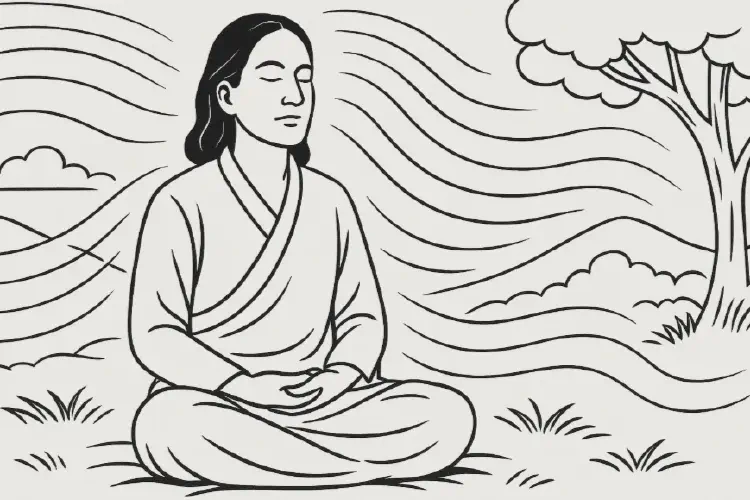
What is Non-Meditation?
- Non-meditation (gom me) means not meditating in the conventional sense of effort or technique.
- It is not blankness, distraction, or passivity, but resting naturally in rigpa.
- The key is effortless presence—awareness recognizing itself without fabrication.
How It Differs from Ordinary Meditation:
- Ordinary meditation: Focuses on objects, concentration, visualization, or controlling the mind.
- Non-meditation: Has no object, effort, or goal; it is abiding in awareness as it is.
- In non-meditation, nothing is rejected, altered, or pursued.
Practical Instructions:
- Sit in a relaxed posture and let go of effort.
- Recognize awareness itself—clear, open, self-knowing.
- Do not try to block thoughts or maintain states; allow everything to arise and dissolve naturally.
- Rest in the recognition that awareness is unbroken, whether thoughts are present or not.
Qualities of Non-Meditation:
- Spacious and open, like the sky.
- Effortless and natural, without strain.
- Inclusive—thoughts, emotions, and perceptions self-liberate within awareness.
Integration into Life:
- Non-meditation is not confined to the cushion—it extends into every activity.
- Walking, speaking, or working can all be expressions of resting in awareness.
- The continuity of non-meditation transforms life itself into practice.
Analogies:
- Like a mirror reflecting everything effortlessly, without effort to reflect.
- Like space—unobstructed, allowing all phenomena but untouched by them.
Summary: In Dzogchen, meditation means non-meditation—effortless resting in awareness. By dropping striving and fabrication, practitioners discover that rigpa is always present, in meditation and in daily life.
You might also like:
- Tags:
- Thoughts Emotions
- Daily Life
- Dissolve Naturally
- Practical Instructions
- Recognize Awareness
- Self Liberate
- Non Meditation
- Presence Awareness
- Instructions Sit
- Resting Naturally
- Self Knowing
- Relaxed Posture
- Effort Recognize
- Like Space
- Effortless Resting
- Perceptions Self
- Practical Instructions Sit
- Perceptions Self Liberate