Relaxation into natural awareness
Semde practices emphasize not creating or fabricating states of mind. Instead, the practitioner relaxes into the natural condition of awareness that is already present.
- Dzogchen Essentials
- 2 min read
Article 2 of 6 in Semde Practices/
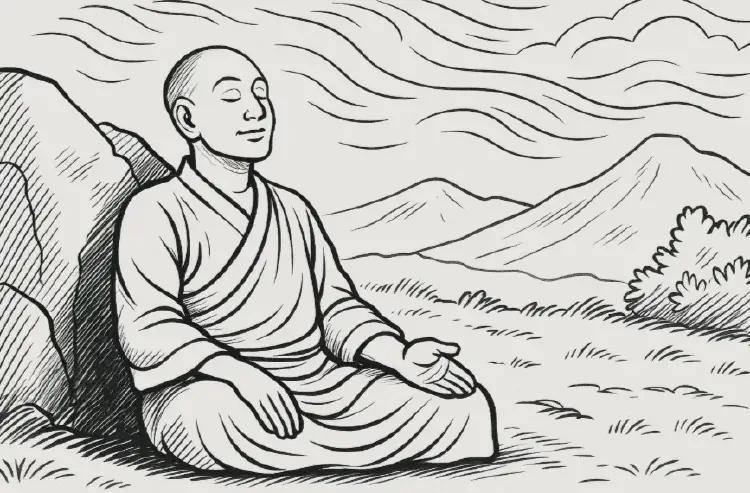
What is Natural Awareness?
- Natural awareness (rigpa) is effortless, luminous, and ever-present.
- Unlike concentration or visualization practices, Dzogchen does not construct states but reveals what is already there.
Relaxation as the Key:
- Relaxation here does not mean laziness or dullness but a release of effort and struggle.
- When body, speech, and mind are settled, the practitioner simply allows awareness to rest in its own nature.
- This relaxation lets thoughts and emotions pass without interference.
Distinguishing Relaxation from Fabrication:
- Fabricated meditation involves striving, controlling, or manipulating experience.
- Relaxation into awareness is open and uncontrived—no effort to maintain or exclude anything.
- Teachers emphasize “leave it as it is, without correction.”
Practical Instructions:
- Sit in a comfortable posture and take a few deep breaths.
- Allow body tension to dissolve naturally.
- Let the mind rest—do not chase thoughts or try to stop them.
- Recognize the open clarity that remains when you do nothing.
Qualities Experienced:
- Spaciousness, like a clear sky.
- Bright presence, without effort.
- Ease and freedom, without clinging or rejection.
Why This Matters in Semde:
- Relaxation into natural awareness is the essence of Semde practices—it introduces the direct taste of rigpa.
- Once recognized, this natural awareness becomes the foundation for all Dzogchen methods.
In summary, relaxation into natural awareness means letting go of effort and resting in the openness of rigpa. It is not about achieving a special state but about recognizing what has always been present.