Balancing effort and relaxation
Dzogchen emphasizes effortless awareness, yet practitioners also need discipline. The balance of effort and relaxation ensures that practice is natural without becoming careless or strained.
- Dzogchen Essentials
- 2 min read
Article 2 of 6 in Practical Tips and Guidance/
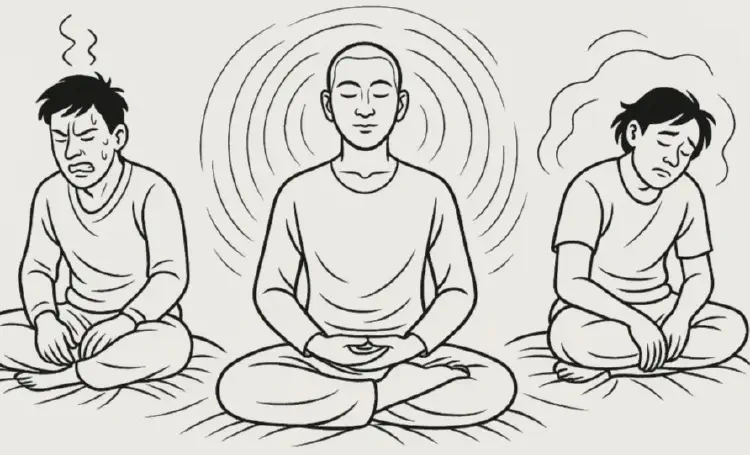
The Challenge of Balance:
- Too much effort creates tension, striving, and fabricated meditation.
- Too much relaxation leads to dullness, distraction, or drifting into passivity.
- True practice rests in the middle way—relaxed yet alert, effortless yet attentive.
Understanding Effort in Dzogchen:
- Effort is needed initially to remember and return to rigpa.
- This is not forceful effort but gentle diligence—repeated recognition.
- Like tending a fire, a little attention keeps the flame alive without smothering it.
Understanding Relaxation in Dzogchen:
- Relaxation means releasing control, allowing awareness to reveal itself.
- It is not collapsing into laziness but resting naturally without fabrication.
- Awareness is like space—open and unobstructed when not interfered with.
Practical Guidance:
- At the start, apply gentle effort to recognize awareness.
- Once recognized, release effort and rest in the openness of rigpa.
- If dullness or distraction arises, renew gentle effort.
- Alternate naturally between remembering and resting until recognition stabilizes.
Analogies from Masters:
- Like tuning a lute string—not too tight (effort) and not too loose (relaxation).
- Like riding a horse—firm enough to guide, loose enough to flow with movement.
Benefits of Balance:
- Prevents strain and burnout in practice.
- Avoids falling into dullness or passivity.
- Supports continuous, natural presence in all activities.
Summary: Balancing effort and relaxation is essential in Dzogchen. Gentle diligence recalls awareness, while relaxation allows it to shine naturally. Together, they sustain a stable, effortless recognition of rigpa without tension or carelessness.