Natural presence vs fabricated meditation
Dzogchen emphasizes *natural presence*—resting in awareness without effort or construction. This is contrasted with *fabricated meditation*, which depends on deliberate techniques or manipulation of the mind.
- Dzogchen Essentials
- 2 min read
Article 5 of 6 in Semde Practices/
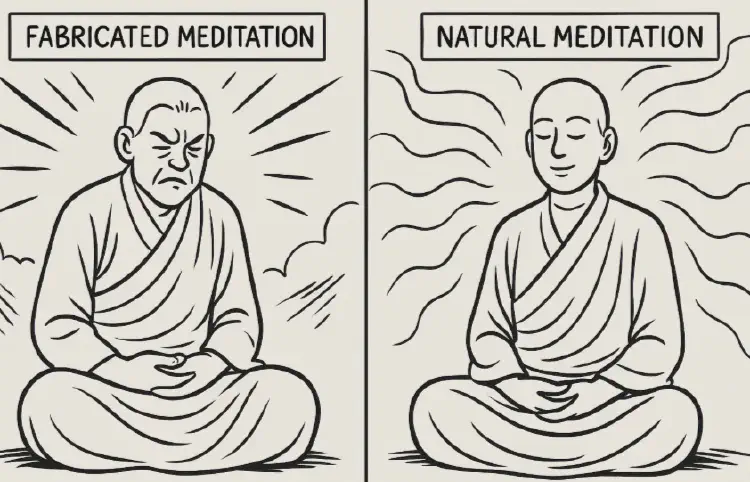
Natural Presence (Unfabricated):
- Awareness (rigpa) is naturally present, luminous, and unchanging.
- Natural presence means resting as you are, without adding effort or removing anything.
- There is no attempt to alter experience—thoughts, emotions, and perceptions self-liberate.
- It is spontaneous, effortless, and free from striving.
Fabricated Meditation:
- Involves deliberate techniques such as focusing on an object, visualizing, or controlling the breath.
- Relies on effort to sustain a state, which may bring temporary calm but remains conditioned.
- Fabrication creates subtle tension, since the practitioner tries to hold onto or construct an experience.
Key Differences:
- Effort: Fabricated meditation depends on effort; natural presence is effortless.
- Goal: Fabricated meditation aims to achieve states; natural presence reveals what is already complete.
- Continuity: Fabricated states end when effort stops; natural presence is unbroken because it is the basis of all experience.
Practical Guidance:
- Instead of trying to meditate, simply rest in awareness itself.
- When thoughts arise, do not suppress or follow them; let them dissolve naturally.
- Relax body, speech, and mind, trusting the openness of rigpa.
Analogies:
- Natural presence is like the sky—always open, unaffected by passing clouds.
- Fabricated meditation is like trying to hold clouds in place—an impossible effort.
Why This Matters in Semde:
- The essence of Semde practice is to discover and remain in natural presence.
- Recognizing the difference between fabricated states and effortless awareness prevents confusion.
In summary, natural presence is the heart of Dzogchen meditation. Unlike fabricated practices, it requires no effort or creation. It is simply resting in the awareness that has always been present.