
Recognizing rigpa
Recognizing rigpa—the pristine awareness at the heart of Dzogchen—is the pivotal moment in practice. It marks the difference between intellectual understanding and direct realization.
Recognizing rigpa—the pristine awareness at the heart of Dzogchen—is the pivotal moment in practice. It marks the difference between intellectual understanding and direct realization.
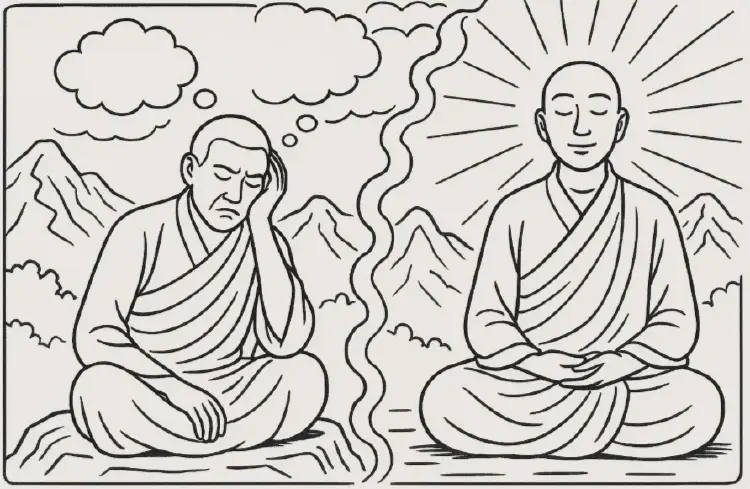
One of the most important insights in Dzogchen is learning to tell the difference between ordinary mind (*sem*) and pure awareness (*rigpa*). Without this clarity, practice can easily fall into confusion.
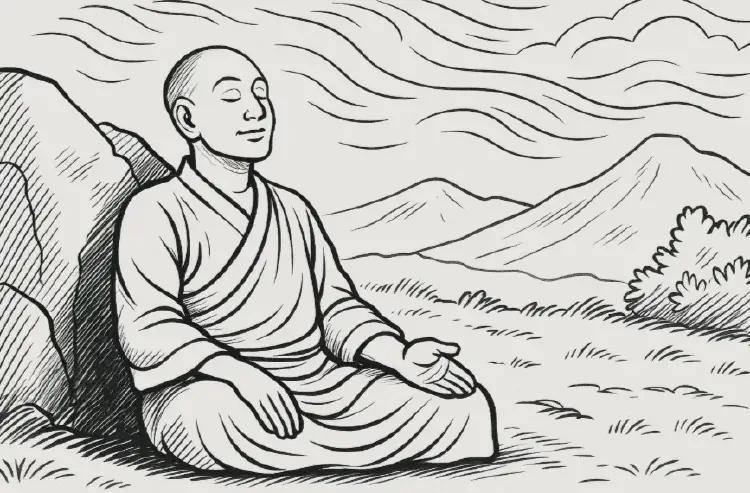
Semde practices emphasize not creating or fabricating states of mind. Instead, the practitioner relaxes into the natural condition of awareness that is already present.

Dzogchen emphasizes direct recognition of awareness, which can be obscured by endless conceptual elaboration. Semde practices provide methods to cut through these layers of thought and return to the natural state.
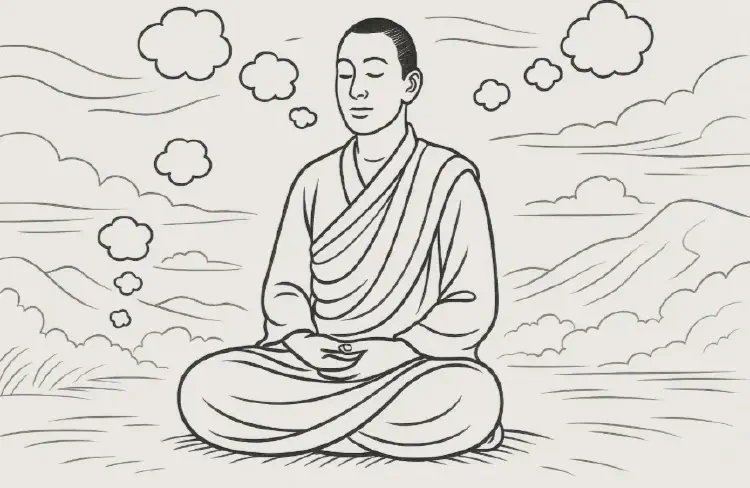
In Dzogchen, thoughts are not seen as obstacles but as natural expressions of awareness. The key is to let them arise and dissolve without interference, revealing their self-liberated nature.
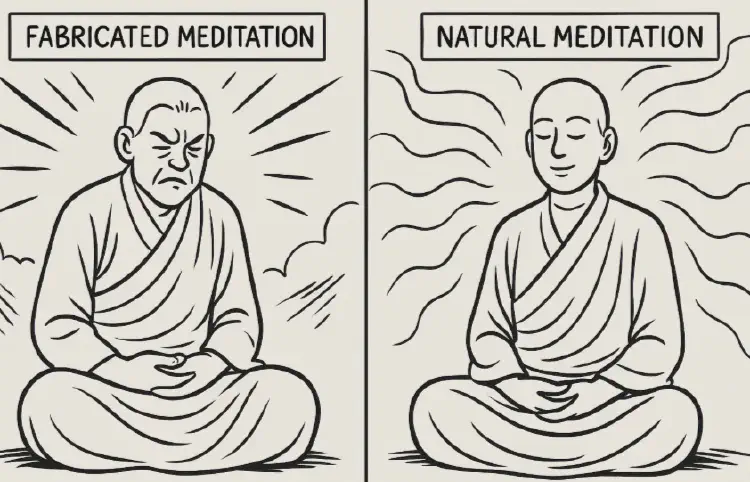
Dzogchen emphasizes *natural presence*—resting in awareness without effort or construction. This is contrasted with *fabricated meditation*, which depends on deliberate techniques or manipulation of the mind.