Foundations of dzogchens

Historical background and origins

Historical background and origins

Dzogchen, often translated as the 'Great Perfection,' has a unique place within Tibetan spiritual traditions. Its history stretches back many centuries and interweaves with both Buddhism and the indigenous Bön tradition of Tibet.
Dzogchen within Tibetan Buddhism

Dzogchen within Tibetan Buddhism

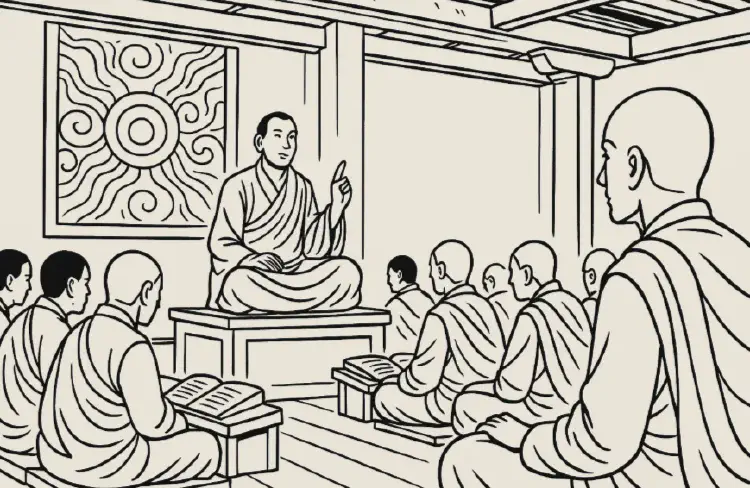
To understand Dzogchen’s place in Tibetan Buddhism, it’s important to see how it relates to the broader framework of Buddhist teachings and why it is often described as the pinnacle of the path.

Key masters and transmission lineages

Key masters and transmission lineages

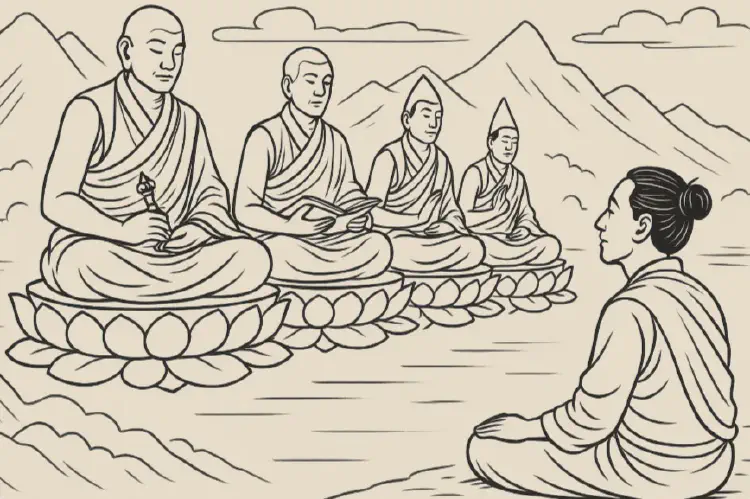
Dzogchen teachings have been preserved and transmitted through unbroken lineages of masters. Understanding these figures and their roles helps to appreciate the authenticity and continuity of the tradition.

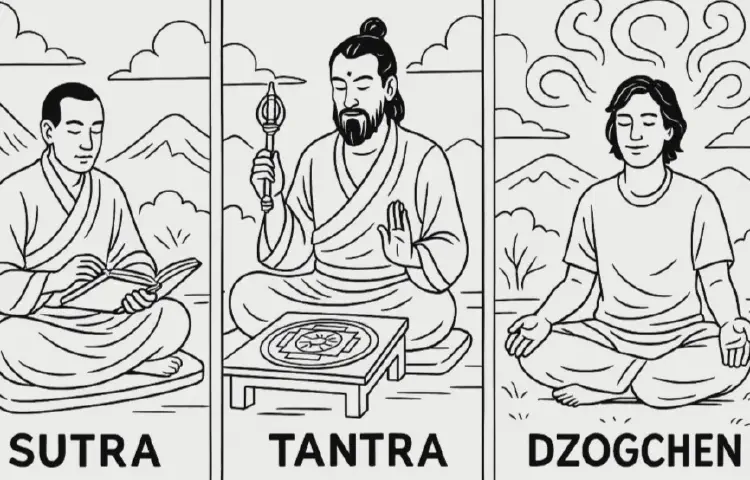
Difference between Sutra, Tantra, and Dzogchen

Difference between Sutra, Tantra, and Dzogchen

Tibetan Buddhism encompasses multiple vehicles of practice. Sutra, Tantra, and Dzogchen each offer distinct approaches, yet they ultimately aim toward the same realization of enlightenment.

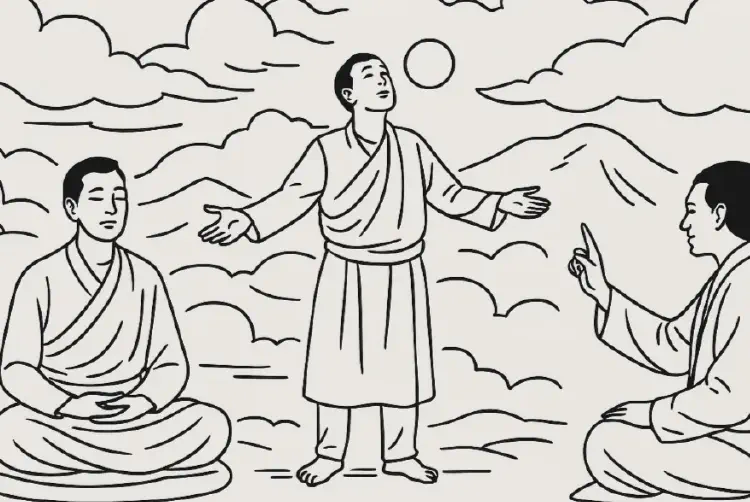
The three series: Semde, Longde, Menngagde

The three series: Semde, Longde, Menngagde

Dzogchen teachings are traditionally organized into three main series, each highlighting a distinct method of introducing and stabilizing recognition of awareness.

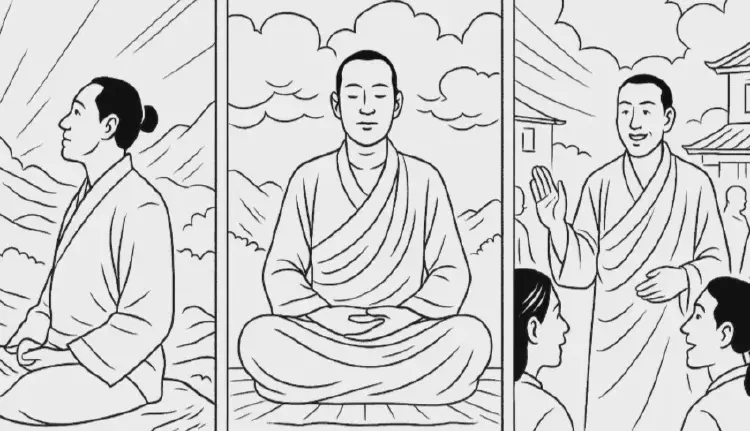
View, Meditation, and Conduct in Dzogchen

View, Meditation, and Conduct in Dzogchen

In Dzogchen, the path is often summarized as view, meditation, and conduct. These three aspects describe how one relates to awareness, how one stabilizes it, and how one integrates it into daily life.