Historical background and origins
Dzogchen, often translated as the 'Great Perfection,' has a unique place within Tibetan spiritual traditions. Its history stretches back many centuries and interweaves with both Buddhism and the indigenous Bön tradition of Tibet.
- Dzogchen Essentials
- 2 min read
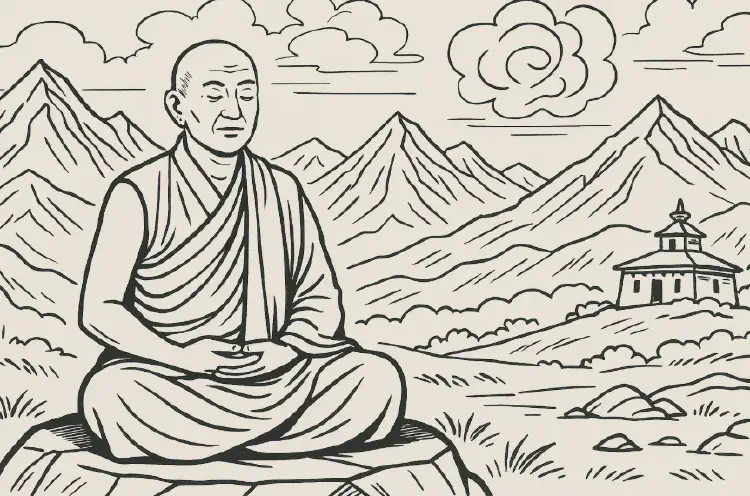
The historical background of Dzogchen reveals a tradition that emphasizes the recognition of the innate purity and completeness of awareness. Its origins are complex, rooted in both pre-Buddhist Bön practices and the transmission of Buddhist teachings from India.
Early Roots: Dzogchen teachings are believed to have been practiced in Tibet as early as the 8th century. Some sources trace them back even earlier to the Bön tradition, where similar contemplative methods were developed to access the nature of mind.
Introduction to Tibet: During the reign of King Trisong Detsen (8th century), great Indian masters such as Padmasambhava, Vimalamitra, and Shantarakshita brought tantric and Dzogchen teachings into Tibet. Padmasambhava, in particular, is venerated as one of the principal figures who transmitted Dzogchen.
Development in Tibet: Once introduced, Dzogchen evolved into a distinctly Tibetan tradition while retaining its connection to Indian Buddhist sources. It was preserved and expanded in the Nyingma school of Tibetan Buddhism, the oldest of the four major schools. Dzogchen also became integrated into the Bön religion, showing its adaptability and universality.
Key Characteristics:
- Dzogchen is presented as a direct path to recognizing rigpa (the natural state of awareness).
- It emphasizes the immediacy of realization rather than gradual accumulation of methods.
- It is regarded as the pinnacle teaching, often called the ‘heart essence’ of the Nyingma school.
Lineage Transmission: The authenticity of Dzogchen is maintained through unbroken lineages of teachers and students. Oral transmission, texts (tantras), and visionary revelations (terma) all play roles in preserving the tradition.
In summary, Dzogchen’s historical background shows a blending of indigenous Tibetan spirituality with Buddhist insight, crystallized through transmission by legendary masters. This fusion created a unique body of teachings that has been preserved and practiced for over a millennium.