Dzogchen within Tibetan Buddhism
To understand Dzogchen’s place in Tibetan Buddhism, it’s important to see how it relates to the broader framework of Buddhist teachings and why it is often described as the pinnacle of the path.
- Dzogchen Essentials
- 2 min read
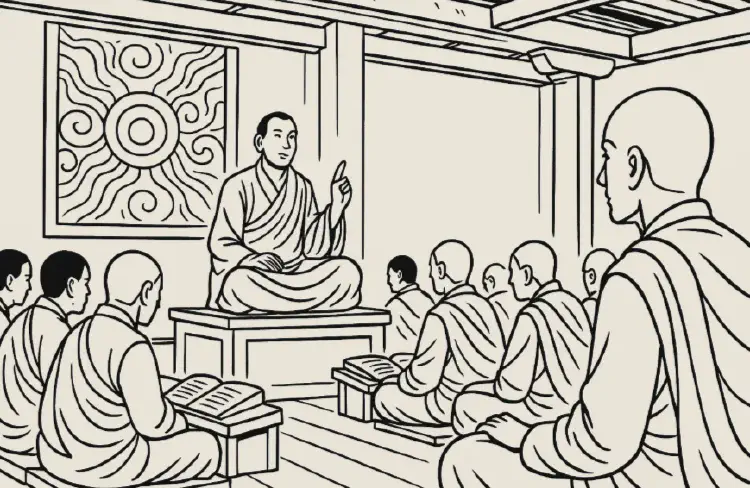
Dzogchen, or the Great Perfection, is regarded as the highest and most direct teaching within the Nyingma school of Tibetan Buddhism. While all Tibetan schools preserve profound meditative and philosophical traditions, Dzogchen holds a unique status as pointing directly to the nature of mind.
Relationship to Tibetan Buddhism:
- Dzogchen is primarily associated with the Nyingma school, the oldest school of Tibetan Buddhism. However, its influence also extends into other traditions, including Bön.
- Within the Buddhist framework, Dzogchen is seen as going beyond the step-by-step methods of Sutra and Tantra, offering a direct recognition of rigpa (pure awareness).
- It complements rather than rejects other Buddhist paths—many practitioners undertake extensive preliminary and tantric practices before receiving Dzogchen instructions.
Philosophical Place:
- Sutra emphasizes ethical conduct, meditation, and wisdom gradually leading to awakening.
- Tantra emphasizes transformation of body, speech, and mind through visualization, mantra, and ritual.
- Dzogchen emphasizes direct recognition of the natural state, described as spontaneous presence and primordial purity.
View, Meditation, Conduct:
- The view of Dzogchen asserts that enlightenment is not something created or gained, but recognized as already present.
- Meditation is not a fabricated state but a resting in the natural awareness that is self-arising.
- Conduct naturally flows from realization, integrating awareness into daily life without contrivance.
Integration into Practice: Dzogchen is not practiced in isolation. In Tibetan Buddhism, it is carefully transmitted by qualified teachers, often after preparatory practices. Its integration shows the depth of Tibetan Buddhism’s multi-layered system—where gradual paths and sudden recognition can coexist.
In essence, Dzogchen is revered as the ultimate teaching of Tibetan Buddhism, emphasizing direct awareness while harmonizing with the broader Buddhist path.
You might also like:
- Tags:
- Direct Recognition
- Daily Life
- Spontaneous Presence
- Natural Awareness
- Body Speech
- Primordial Purity
- Natural State
- Tibetan Buddhism
- Emphasizes Direct
- Dzogchen Instructions
- Nyingma School
- Ethical Conduct
- Dzogchen Emphasizes
- Essence Dzogchen
- Rigpa Pure
- Emphasizes Direct Recognition
- Dzogchen Emphasizes Direct