The importance of preliminary practices (ngöndro)
Ngöndro, or preliminary practices, are considered essential in Tibetan Buddhism. They prepare the body, speech, and mind for the subtler recognitions of Dzogchen.
- Dzogchen Essentials
- 2 min read
Article 2 of 6 in Preparation and Ground/
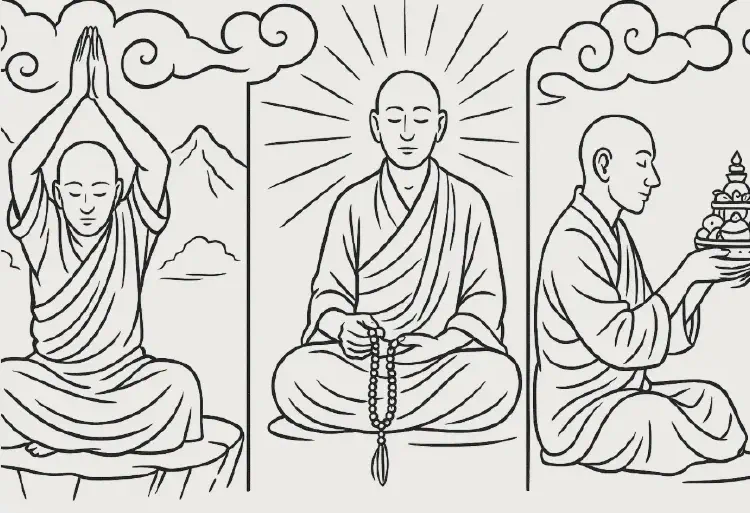
What is Ngöndro?
- Ngöndro refers to a set of foundational practices that purify obscurations and accumulate merit.
- They are not ‘basic’ in the sense of being simplistic; rather, they establish the conditions for advanced practices to unfold.
Outer Preliminaries (common to all schools):
- Contemplation on the four thoughts that turn the mind to Dharma:
- Precious human rebirth.
- Impermanence and death.
- Karma—cause and effect.
- The defects of samsara.
- These reflections create urgency and motivation for practice.
Inner Preliminaries (unique to Vajrayana traditions): Usually practiced in sets of 100,000 repetitions:
- Refuge and Prostrations: Cultivates humility, faith, and commitment to the path.
- Vajrasattva Purification: Purifies obscurations through mantra recitation and visualization.
- Mandala Offering: Accumulates merit by offering the universe symbolically.
- Guru Yoga: Connects the practitioner’s mind with the wisdom mind of the teacher.
Why Ngöndro is Important in Dzogchen:
- While Dzogchen emphasizes direct recognition of awareness, practitioners benefit greatly from a mind that has been purified and prepared.
- Ngöndro helps dissolve obstacles like pride, doubt, and karmic imprints.
- It builds devotion and openness, crucial for receiving direct introduction from a master.
Practical Perspective:
- Ngöndro can be lengthy and challenging, but teachers emphasize doing it with sincerity over speed.
- Even partial completion plants deep seeds of transformation.
- Many Dzogchen masters state that the depth of Dzogchen realization depends on the depth of Ngöndro practice.
In essence, preliminary practices are not merely a prelude but a powerful part of the path. They provide the fertile ground in which the recognition of rigpa can take root and flourish.