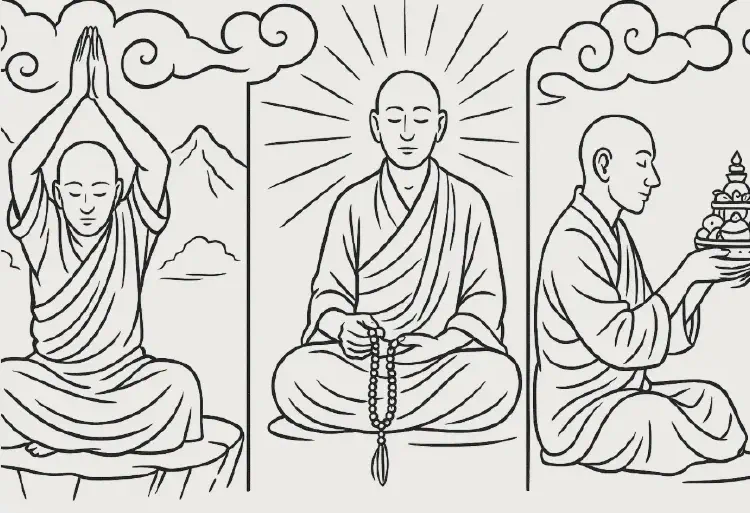
The importance of preliminary practices (ngöndro)
Ngöndro, or preliminary practices, are considered essential in Tibetan Buddhism. They prepare the body, speech, and mind for the subtler recognitions of Dzogchen.
Ngöndro, or preliminary practices, are considered essential in Tibetan Buddhism. They prepare the body, speech, and mind for the subtler recognitions of Dzogchen.
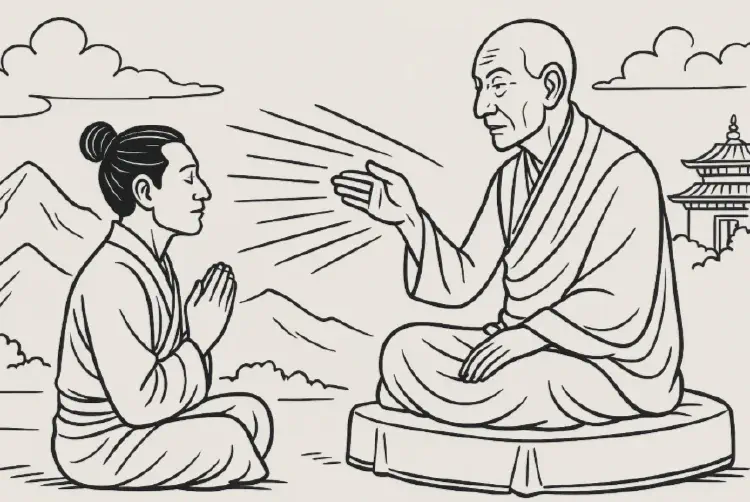
In Dzogchen, the teacher is not only a guide but also the living embodiment of the teachings. Transmission from teacher to student is considered indispensable for authentic practice.
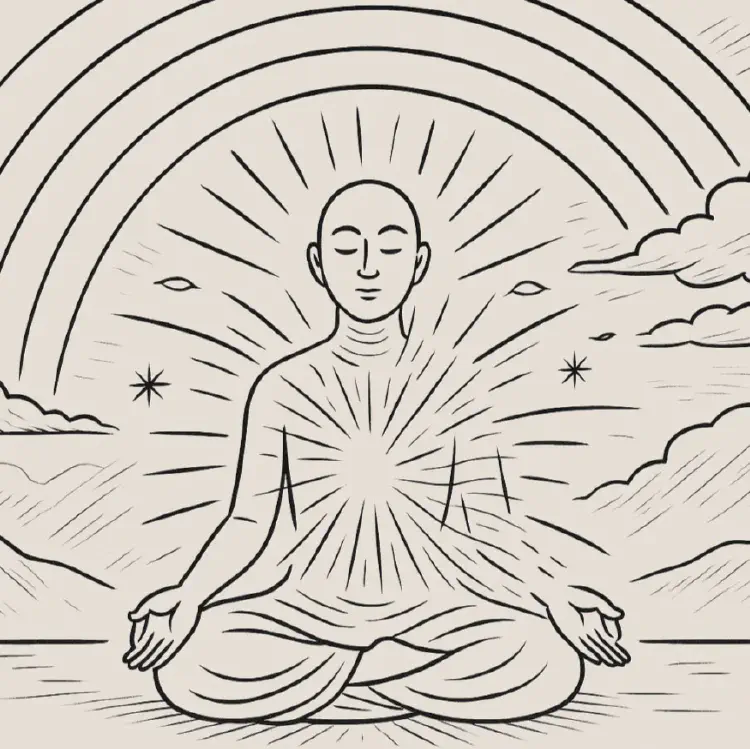
The rainbow body is one of the most profound teachings in Dzogchen. It describes the dissolution of the practitioner’s body into light at the culmination of Tögal practice and realization of rigpa.
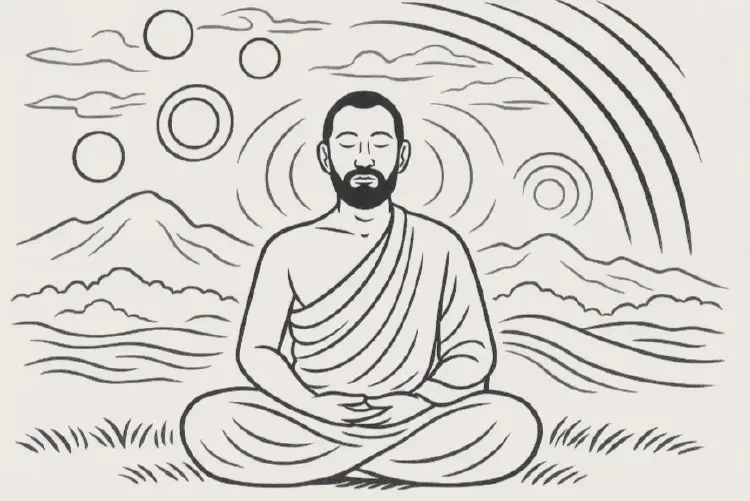
Tögal practices reveal luminous visionary experiences, but they must be approached from a foundation of stability in Trekchö and recognition of rigpa. Without stability, visions can confuse rather than liberate.
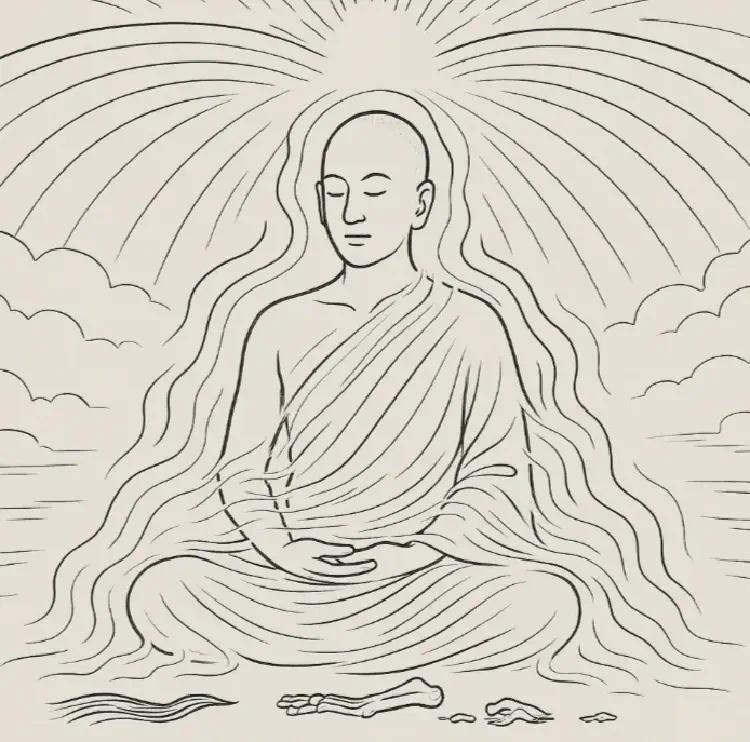
The rainbow body is regarded in Dzogchen as the supreme sign of complete realization. It represents the full integration of Trekchö and Tögal, where the practitioner’s body dissolves into light at death.