Transmission and teacher’s role
In Dzogchen, the teacher is not only a guide but also the living embodiment of the teachings. Transmission from teacher to student is considered indispensable for authentic practice.
- Dzogchen Essentials
- 2 min read
Article 1 of 6 in Direct Introduction/
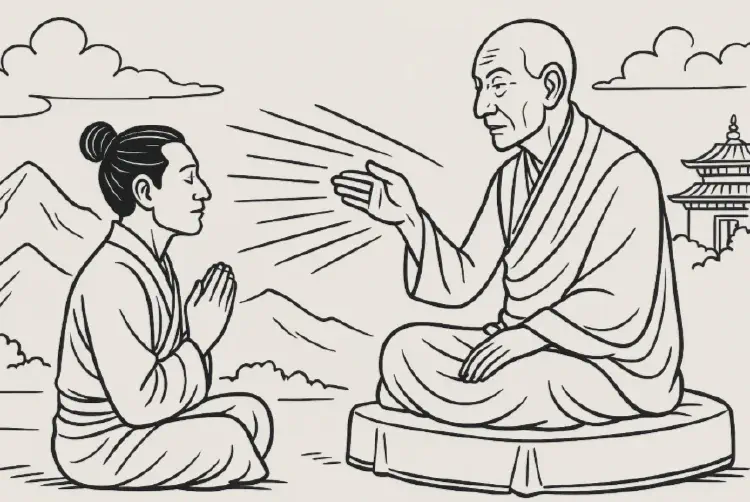
Transmission in Dzogchen:
- Transmission is the direct introduction of the student to the nature of their own mind—rigpa.
- Unlike theoretical learning, it is an experiential pointing-out, beyond words and concepts.
- Transmission can occur through oral instructions, symbolic gestures, or even the teacher’s mere presence, depending on the readiness of the student.
The Role of the Teacher (Lama):
- The teacher serves as the link in the unbroken lineage that ensures the purity and authenticity of Dzogchen.
- They embody the realization of awareness, making it accessible for students to recognize in themselves.
- The teacher’s compassion, wisdom, and direct guidance protect the student from misunderstanding or misusing the teachings.
Why the Teacher is Essential:
- Dzogchen cannot be learned from books alone; recognition of rigpa requires direct introduction.
- The teacher ensures the student does not mistake dullness, blankness, or ordinary thought for awareness.
- Devotion and trust in the teacher open the student’s heart, allowing transmission to take root.
Forms of Transmission:
- Direct Introduction (ngo sprod): The teacher directly reveals the student’s own awareness.
- Scriptural Transmission (lung): Reading and authorizing texts, ensuring connection to lineage.
- Empowerment (wang): Ritual initiation that provides access to specific practices.
Teacher-Student Relationship:
- Rooted in respect, devotion, and trust.
- The student is encouraged to test the teacher’s authenticity through observation of their conduct and realization.
- Once confidence is established, the relationship becomes the central channel for Dzogchen realization.
In summary, the role of the teacher in Dzogchen is irreplaceable. Transmission is not simply information but a living spark of recognition that awakens the student to their own true nature.