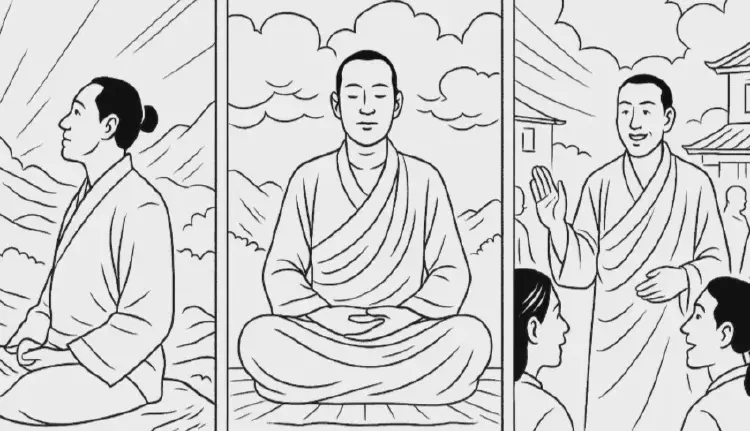
View, Meditation, and Conduct in Dzogchen
In Dzogchen, the path is often summarized as view, meditation, and conduct. These three aspects describe how one relates to awareness, how one stabilizes it, and how one integrates it into daily life.
In Dzogchen, the path is often summarized as view, meditation, and conduct. These three aspects describe how one relates to awareness, how one stabilizes it, and how one integrates it into daily life.

Before engaging in Dzogchen or any higher Buddhist practice, practitioners cultivate motivation and bodhicitta—the altruistic intention to attain enlightenment for the benefit of all beings.
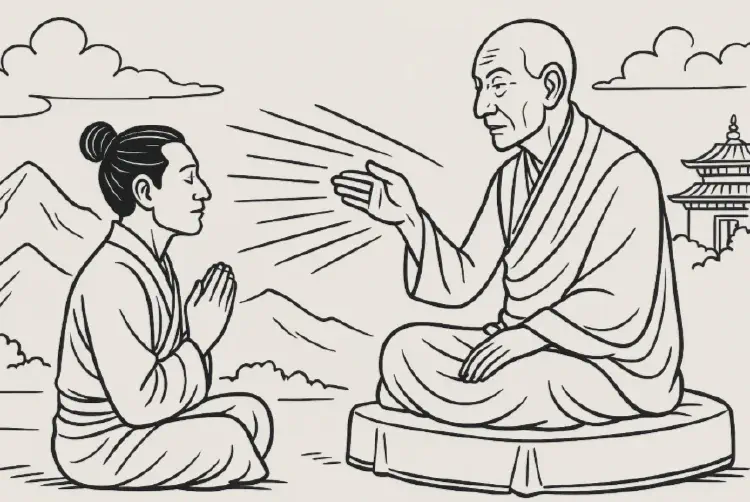
In Dzogchen, the teacher is not only a guide but also the living embodiment of the teachings. Transmission from teacher to student is considered indispensable for authentic practice.
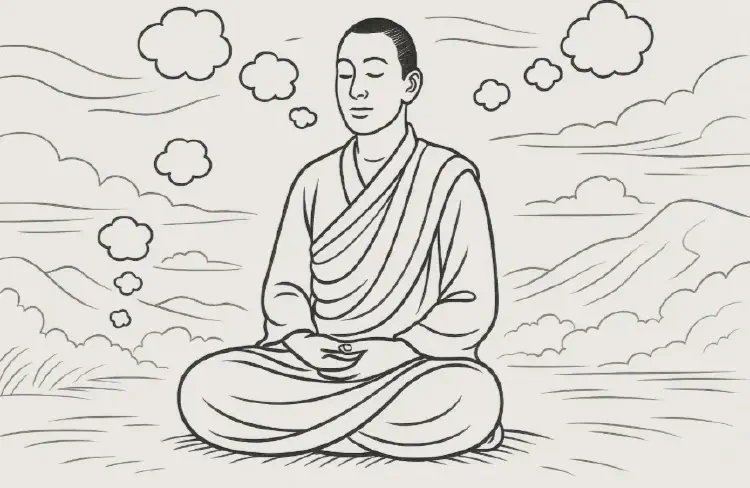
In Dzogchen, thoughts are not seen as obstacles but as natural expressions of awareness. The key is to let them arise and dissolve without interference, revealing their self-liberated nature.