Refuge and cultivating devotion
In Dzogchen and Tibetan Buddhism as a whole, refuge and devotion form the foundation of the practitioner’s relationship with the teachings, the teacher, and the path itself.
- Dzogchen Essentials
- 2 min read
Article 3 of 6 in Preparation and Ground/
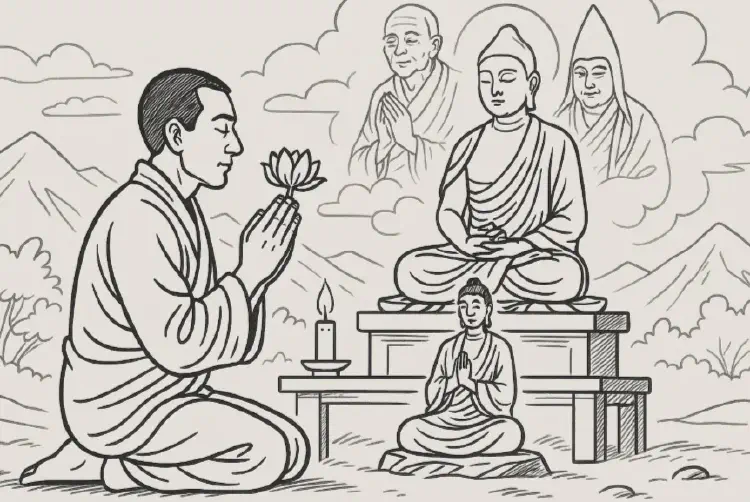
Taking Refuge:
- Refuge means entrusting oneself to the Three Jewels (Buddha, Dharma, Sangha) and, in Vajrayana contexts, also the Three Roots (Lama, Yidam, Dakini).
- It represents the formal entry into the Buddhist path and creates a sacred orientation for all practice.
- Refuge is not blind faith; it is a conscious commitment to rely on awakened guidance rather than samsaric habits.
Cultivating Devotion:
- In Dzogchen, devotion is often directed especially toward the teacher (lama), who is seen as embodying the wisdom mind of all Buddhas.
- Devotion opens the heart and dissolves egoic resistance, making it possible to receive direct introduction to rigpa.
- Without devotion, Dzogchen instructions may remain intellectual rather than transformative.
Refuge and Devotion in Practice:
- Refuge Prayer and Prostrations: Practiced daily as part of ngöndro, combining body, speech, and mind in aligning with the path.
- Guru Yoga: Visualizing and merging with the teacher’s enlightened mind, strengthening faith and receptivity.
- Offerings: Symbolic acts, such as butter lamps, incense, or simple heartfelt gestures, cultivate gratitude and openness.
Why Refuge and Devotion are Essential in Dzogchen:
- Dzogchen is transmitted experientially, not only through study. Devotion ensures the practitioner is receptive to the teacher’s blessing and introduction.
- Refuge provides a compass, reminding practitioners that realization is not for personal gain but for liberation and the benefit of beings.
- Devotion stabilizes humility and trust, countering pride or doubt that may obstruct recognition of awareness.
In summary, refuge anchors the practitioner in the Buddhist path, while devotion opens the heart to the transformative power of Dzogchen transmission. Together, they create the conditions for authentic recognition of rigpa.