Avoiding intellectual grasping
Dzogchen emphasizes direct recognition of awareness, which lies beyond conceptual thinking. Over-reliance on intellectual analysis can obscure this recognition and turn practice into philosophy rather than realization.
- Dzogchen Essentials
- 2 min read
Article 6 of 6 in Direct Introduction/
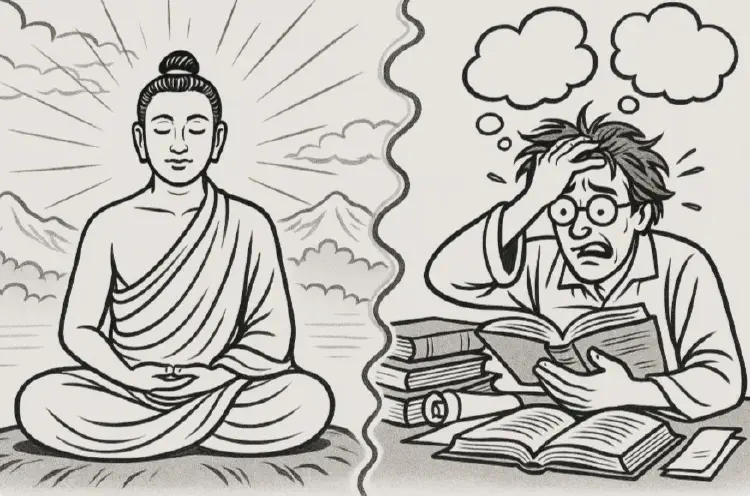
What is Intellectual Grasping?
- It is the tendency to cling to concepts, theories, or descriptions instead of experiencing awareness directly.
- Examples include overanalyzing Dzogchen texts, debating subtle points of philosophy, or trying to ‘think’ oneself into rigpa.
- While study is valuable, Dzogchen warns against mistaking intellectual knowledge for realization.
Why It Is a Problem in Dzogchen:
- Rigpa is beyond thought—it cannot be constructed or fully captured by concepts.
- Clinging to intellectual understanding strengthens dualistic mind (sem), which Dzogchen aims to transcend.
- The more one grasps at words, the further one may drift from direct experience.
Signs of Intellectual Grasping:
- Constantly seeking more teachings without applying them.
- Becoming proud of one’s knowledge while lacking experiential recognition.
- Confusing temporary calm states or ideas about rigpa with actual awareness.
How to Avoid Intellectual Grasping:
- Trust Direct Introduction: Once the teacher has pointed out rigpa, rely on that recognition rather than endless analysis.
- Balance Study with Practice: Use texts as supports, but return to experiential resting in awareness.
- Let Go of Mental Effort: When thoughts of ‘Am I doing this right?’ arise, allow them to self-liberate instead of chasing answers.
- Rely on the Teacher: Guidance from an authentic master keeps the student grounded in direct experience.
Analogies in Dzogchen:
- Reading a menu vs. tasting the food—intellectual knowledge cannot replace the actual experience of rigpa.
- Pointing at the moon vs. seeing the moon—the teachings are pointers, not the realization itself.
In summary, avoiding intellectual grasping means letting Dzogchen remain alive and direct. Concepts can guide, but realization comes only through recognizing awareness itself, free from mental elaboration.