Key masters and transmission lineages
Dzogchen teachings have been preserved and transmitted through unbroken lineages of masters. Understanding these figures and their roles helps to appreciate the authenticity and continuity of the tradition.
- Dzogchen Essentials
- 2 min read
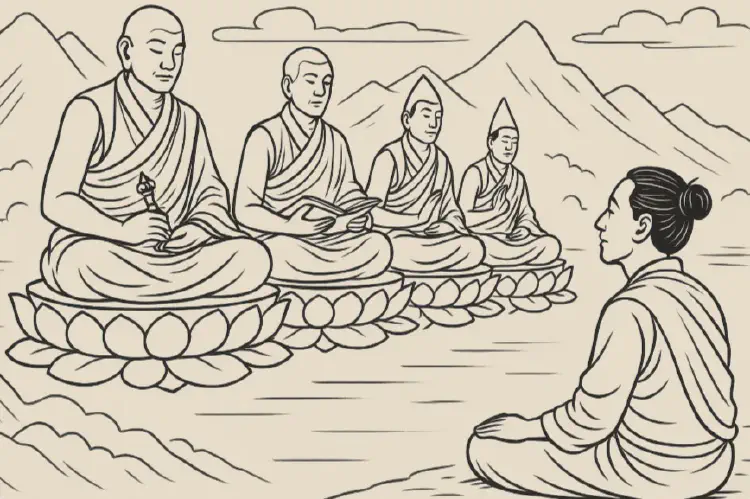
The transmission of Dzogchen is inseparable from the lives and work of great masters who safeguarded and passed down its instructions. These teachers ensured that the teachings were not only preserved in texts but also directly experienced through oral and practical transmission.
Foundational Figures:
- Garab Dorje (1st century CE, legendary): Regarded as the first human master of Dzogchen. He condensed the teachings into the Three Statements of Garab Dorje: direct introduction, certainty in the view, and confidence in liberation.
- Padmasambhava (8th century): Brought Vajrayana and Dzogchen teachings to Tibet. He transmitted many secret instructions and concealed termas (hidden treasures) to be revealed by future masters.
- Vimalamitra (8th century): An Indian master invited to Tibet, renowned for transmitting profound Dzogchen instructions and commentaries.
Lineage Transmission in Tibet:
- Nyingma Lineage: Dzogchen became the heart essence of the Nyingma school, where teachings were transmitted in two main ways:
- Kama (oral transmission): Direct teacher-to-student transmission of texts and instructions.
- Terma (treasure tradition): Hidden teachings revealed by tertöns (treasure revealers), ensuring renewal of the teachings in different historical contexts.
Important Masters After the 8th Century:
- Longchen Rabjam (Longchenpa, 14th century): Systematized and clarified Dzogchen philosophy and practice in his extensive writings. His works remain central to study and practice today.
- Jigme Lingpa (18th century): Revealed the Longchen Nyingthig, one of the most widely practiced Dzogchen cycles.
- Patrul Rinpoche (19th century): Known for his accessible teachings on compassion and Dzogchen, especially in The Words of My Perfect Teacher.
Living Transmission: Today, Dzogchen is taught by authentic masters within both Nyingma and Bön traditions. Transmission requires direct introduction by a qualified teacher to preserve authenticity and ensure correct understanding.
In summary, the transmission lineages of Dzogchen—from Garab Dorje to contemporary masters—form a living chain that guarantees the continuity, purity, and experiential depth of these profound teachings.