Advanced guidance under teacher supervision
The Menngagde (Instruction Series) practices, especially Tögal, are considered extremely advanced. They require close supervision by a qualified teacher to ensure safe and authentic progress.
- Dzogchen Essentials
- 2 min read
Article 6 of 6 in Menngagde Practices/
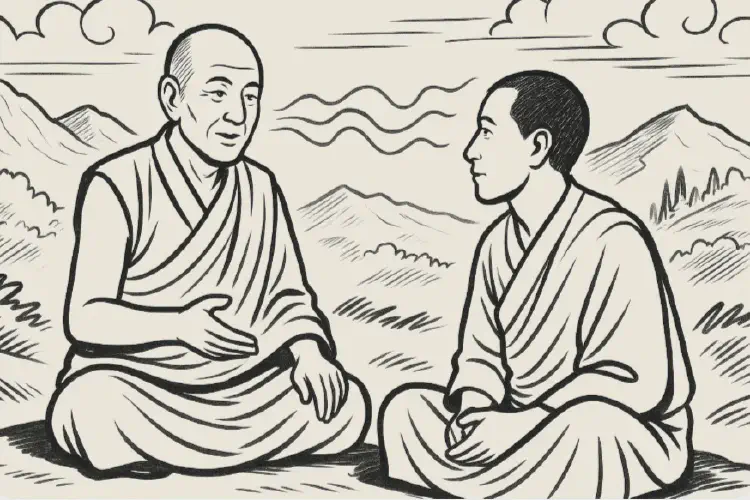
Why Teacher Supervision is Essential:
- Menngagde practices involve powerful methods such as Trekchö and Tögal that can bring rapid transformation.
- Tögal, in particular, generates visionary experiences that may be misunderstood or misused without guidance.
- A teacher ensures that the practitioner integrates experiences correctly, avoiding pitfalls of ego, fear, or attachment.
Risks Without Proper Guidance:
- Mistaking ordinary mental phenomena or hallucinations for authentic visions.
- Becoming attached to lights, deities, or displays instead of recognizing them as expressions of awareness.
- Experiencing psychological imbalance from intense or overwhelming visionary practices.
The Teacher’s Role:
- Provides direct introduction to rigpa and confirms the student’s recognition.
- Offers personalized instructions for Trekchö and Tögal practices, tailored to the student’s capacity.
- Monitors the student’s progress and corrects misunderstandings.
- Ensures ethical grounding and bodhicitta motivation remain strong.
Qualities of a Qualified Teacher:
- Authentic connection to an unbroken Dzogchen lineage.
- Personal realization and stability in rigpa.
- Compassionate ability to guide students without exploitation or distortion.
Responsibilities of the Student:
- Approach advanced practices with humility and devotion.
- Avoid self-guided experimentation with Tögal without teacher support.
- Maintain consistency in foundational practices such as bodhicitta and ngöndro.
- Trust and apply the teacher’s instructions with diligence.
Summary: Advanced Menngagde practices are profound gateways to realization but require close guidance. Under a qualified teacher, practitioners navigate visionary experiences safely, ensuring that Trekchö and Tögal lead to genuine liberation rather than confusion or spiritual pride.