Breathing exercises and channels
Although Dzogchen emphasizes direct recognition of awareness, supportive practices such as breathing and working with subtle channels help clear obstacles and harmonize body, speech, and mind.
- Dzogchen Essentials
- 2 min read
Article 1 of 6 in Supportive Practices/
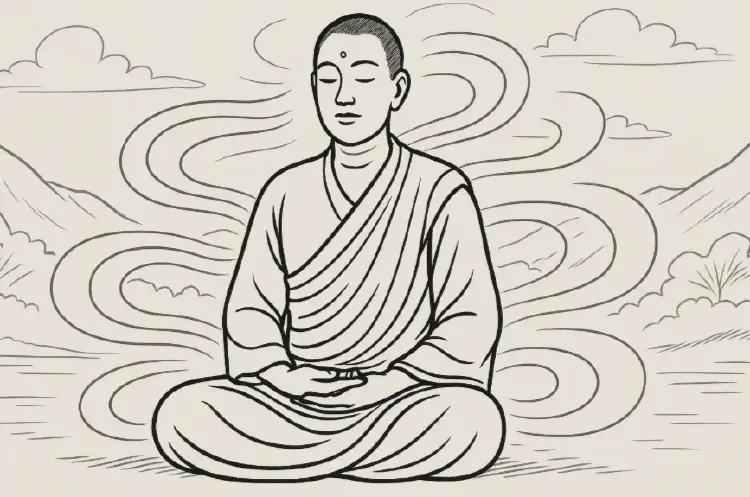
Breathing in Dzogchen Context:
- Breath is closely linked with energy (lung, prana) and mind.
- When the breath is calm, the mind naturally settles, making recognition of rigpa easier.
- Breathing exercises prepare the subtle body so awareness can manifest more clearly.
Energy Channels (Tsa) and Winds (Lung):
- Tibetan teachings describe a network of subtle channels through which vital energy flows.
- Blockages in these channels disturb both physical health and clarity of mind.
- By working with breath and channels, practitioners purify obstacles that obscure awareness.
Common Breathing Exercises in Support of Dzogchen:
- Nine Purification Breaths: Clearing stale energies and emotional blockages before meditation.
- Gentle Vase Breathing: Holding subtle breath to balance internal winds.
- Alternate Nostril Breathing: Harmonizing left and right channels for balance of energy.
How This Supports Dzogchen Practice:
- Creates relaxation and clarity in body and mind.
- Removes agitation and dullness, making natural awareness easier to recognize.
- Prepares for advanced practices such as Tögal, which require subtle body stability.
Cautions:
- These practices are supportive, not substitutes for direct recognition of rigpa.
- They should be done gently and, when advanced, under teacher supervision.
Analogy:
- Just as cleaning a window allows sunlight to shine through, clearing the channels allows awareness to radiate unobstructed.
Summary: Breathing exercises and channel practices support Dzogchen by harmonizing the body’s subtle energies. They remove obstacles, calm the mind, and create favorable conditions for recognizing and stabilizing rigpa.