Chöd practice and releasing fear
Chöd, meaning 'cutting through,' is a powerful supportive practice sometimes integrated with Dzogchen. It is designed to cut attachment to the self and dissolve fear, especially fear of death and demons of the mind.
- Dzogchen Essentials
- 2 min read
Article 5 of 6 in Supportive Practices/
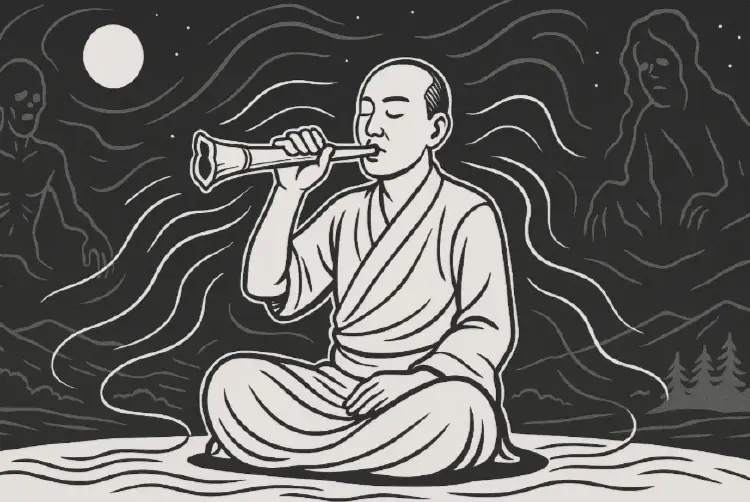
What is Chöd?
- A tantric and Dzogchen-related practice originating with Machig Labdrön in Tibet.
- Involves ritual visualization, chanting, and use of the damaru (drum) and bell.
- The central practice is offering one’s own body as food to beings—gods, demons, and spirits—as an act of ultimate generosity.
Purpose of Chöd:
- Cuts through ego-clinging and attachment to the body.
- Transforms fear into recognition of awareness.
- Reveals that demons are not external but manifestations of mind.
Chöd and Fear:
- Practitioners traditionally perform Chöd in frightening places such as cemeteries or charnel grounds.
- By visualizing offering one’s body, fear of death and harm is confronted directly.
- Recognition of rigpa transforms fear into liberation, showing that awareness is never threatened.
How Chöd Supports Dzogchen:
- By cutting self-grasping, it prepares the practitioner to rest in primordial awareness.
- Fear and clinging are dissolved, allowing direct recognition of the natural state.
- The practice complements Dzogchen by embodying compassion and non-attachment.
Practical Instructions (Simplified):
- Begin with refuge and bodhicitta motivation.
- Visualize your body transforming into nectar or food offered to all beings.
- Chant and play ritual instruments to accompany the visualization.
- Rest in the awareness that remains when attachment and fear dissolve.
Benefits:
- Releases deep-seated fears and attachments.
- Strengthens compassion through radical generosity.
- Integrates death and impermanence into practice, preparing for dying and bardo.
Summary: Chöd practice is a method of cutting through ego and releasing fear by offering one’s body as a gift to all beings. In the Dzogchen context, it supports realization by dissolving self-clinging and revealing the fearless nature of rigpa.