Dzogchen view in challenging circumstances
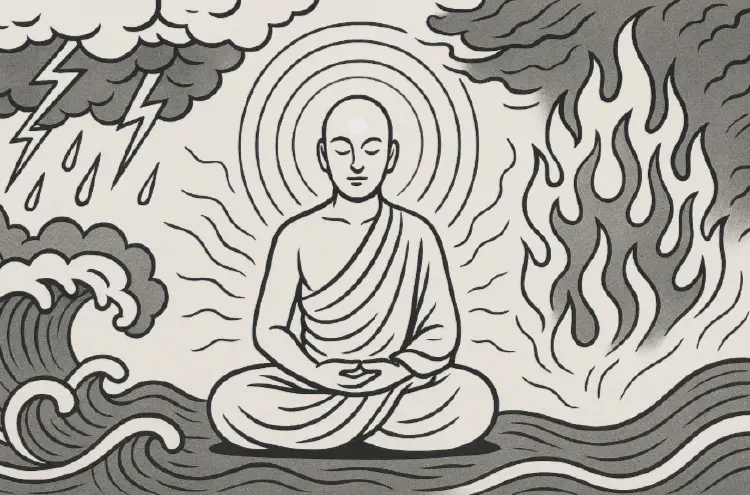
Difficult circumstances—illness, loss, conflict, or fear—are unavoidable in life. In Dzogchen, these are not seen as obstacles but as opportunities to deepen recognition of awareness.
- Dzogchen Essentials
- 1 min read
Article 2 of 6 in Advanced Integration and Realization/
Understanding the Dzogchen View:
- Rigpa, the natural state, is unchanging, regardless of external events.
- Circumstances, whether pleasant or painful, arise and dissolve like waves in the ocean of awareness.
- By holding the Dzogchen view, practitioners recognize challenges as displays of mind rather than fixed realities.
Applying the View in Difficulty:
- Pause in Awareness: When strong emotions or hardship arise, return to rigpa instead of reacting.
- Self-Liberation of Emotions: Fear, anger, or grief dissolve naturally when recognized in awareness.
- Compassionate Response: Difficulties can strengthen bodhicitta—using personal suffering to cultivate empathy for others.
Examples of Practice in Challenging Situations:
- Illness: Recognize the body as an appearance within awareness; pain becomes sensation within open space.
- Conflict: Instead of reacting, rest in rigpa and allow clarity to guide speech and action.
- Loss: See impermanence directly, recognizing that awareness itself is never lost.
Benefits of Maintaining the View:
- Reduces fear and reactivity.
- Transforms obstacles into supports for realization.
- Builds resilience, confidence, and compassion.
Dzogchen Insight:
- Challenges do not obscure awareness; they reveal its unchanging nature.
- Like a rainbow appearing in the sky, difficulties are vivid but insubstantial.
Summary: Holding the Dzogchen view in challenging circumstances means recognizing that awareness is never diminished by hardship. Difficulties become gateways to stability, compassion, and deeper realization of rigpa.