Working with emotions through recognition
Emotions are often viewed as obstacles in spiritual practice, but in Dzogchen they are embraced as expressions of awareness. The key is not suppression but recognition.
- Dzogchen Essentials
- 2 min read
Article 3 of 6 in Integration into Life/
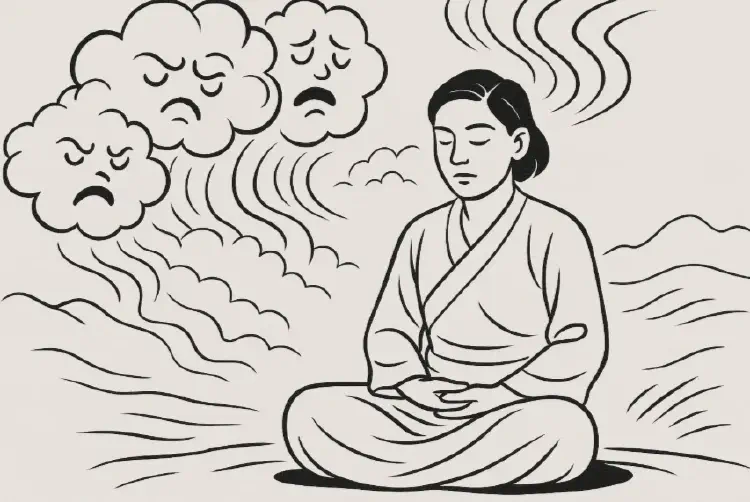
The Nature of Emotions in Dzogchen:
- Emotions—anger, desire, fear, joy—arise naturally like waves in the ocean.
- In ordinary mind, they lead to attachment, aversion, or confusion.
- In rigpa, emotions are recognized as empty appearances with no inherent solidity.
Recognition Instead of Suppression:
- Dzogchen does not encourage fighting or suppressing emotions.
- When an emotion arises, the practitioner recognizes the awareness in which it appears.
- Recognition allows the emotion to self-liberate, dissolving back into the openness of rigpa.
Practical Instructions:
- When an emotion arises, pause and notice it without judgment.
- Shift attention to the awareness that knows the emotion.
- Allow the emotion to dissolve naturally, like a rainbow fading into the sky.
- Repeat this process with each arising emotional wave.
Benefits of This Approach:
- Reduces being overwhelmed or controlled by emotions.
- Transforms emotional energy into clarity and compassion.
- Deepens confidence in the self-liberating power of awareness.
Dzogchen Insight:
- Emotions are not obstacles but fuel for realization when recognized.
- Anger becomes mirror-like wisdom, desire becomes discriminating awareness, fear becomes clarity—each emotion reveals its wisdom aspect in rigpa.
Analogy:
- Like a rainbow in the sky—vivid and colorful, yet lacking substance.
- Emotions, too, are appearances without inherent reality.
Summary: Working with emotions in Dzogchen means recognizing them as self-liberating appearances within rigpa. Instead of suppression or indulgence, emotions become gateways to realization, revealing the wisdom qualities of awareness.
You might also like:
- Tags:
- Dzogchen Insight
- Dissolve Naturally
- Practical Instructions
- Self Liberate
- Ordinary Mind
- Self Liberating
- Analogy Like
- Naturally Like
- Like Waves
- Dzogchen Does
- Attachment Aversion
- Like Rainbow
- Means Recognizing
- Liberating Appearances
- Rigpa Practical
- Dzogchen Means
- Self Liberating Appearances
- Dissolve Naturally Like