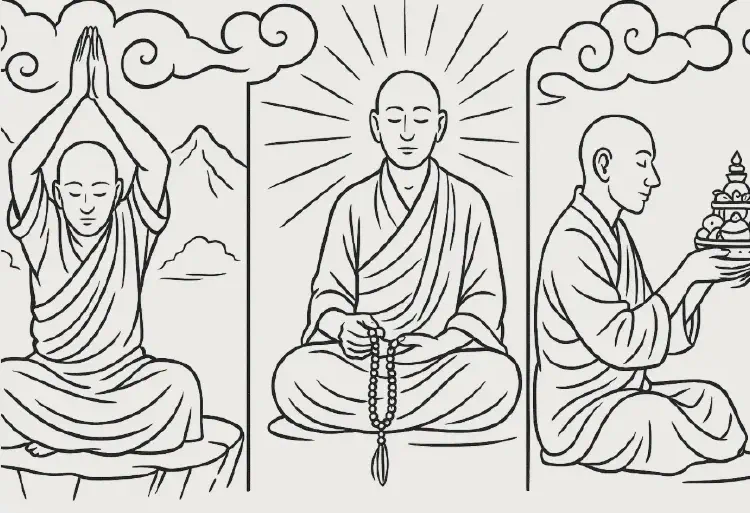
The importance of preliminary practices (ngöndro)
Ngöndro, or preliminary practices, are considered essential in Tibetan Buddhism. They prepare the body, speech, and mind for the subtler recognitions of Dzogchen.
Ngöndro, or preliminary practices, are considered essential in Tibetan Buddhism. They prepare the body, speech, and mind for the subtler recognitions of Dzogchen.
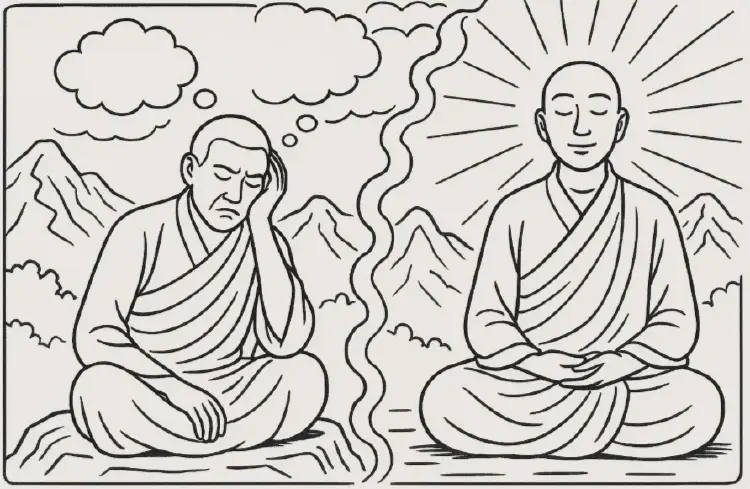
One of the most important insights in Dzogchen is learning to tell the difference between ordinary mind (*sem*) and pure awareness (*rigpa*). Without this clarity, practice can easily fall into confusion.

Semde practices emphasize not creating or fabricating states of mind. Instead, the practitioner relaxes into the natural condition of awareness that is already present.

In Tögal and other Menngagde practices, practitioners may encounter extraordinary experiences of light, colors, and visionary appearances. These are understood as natural displays of awareness, not external phenomena.
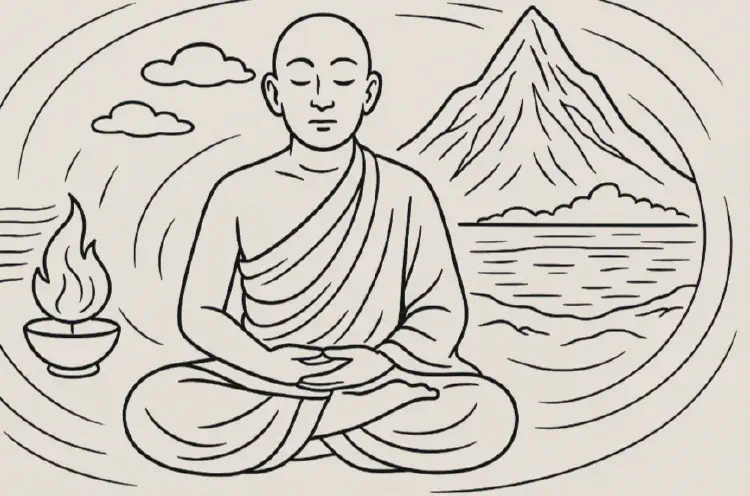
In Dzogchen, early glimpses of rigpa are fragile and easily lost. Stabilization means that recognition of awareness becomes continuous, effortless, and integrated into all states of being.