Dzogchen within Tibetan Buddhism
To understand Dzogchen’s place in Tibetan Buddhism, it’s important to see how it relates to the broader framework of Buddhist teachings and why it is often described as the pinnacle of the path.
To understand Dzogchen’s place in Tibetan Buddhism, it’s important to see how it relates to the broader framework of Buddhist teachings and why it is often described as the pinnacle of the path.
Dzogchen teachings are traditionally organized into three main series, each highlighting a distinct method of introducing and stabilizing recognition of awareness.
Rigpa is the central term in Dzogchen, pointing to the innate awareness that is beyond concepts, unconditioned, and ever-present. Understanding it is essential before engaging deeply in Dzogchen practice.
Trekchö, often translated as 'cutting through,' is one of the two central practices of Menngagde. It directly reveals the primordial purity of awareness by cutting through the rigidity of grasping and conceptual elaboration.
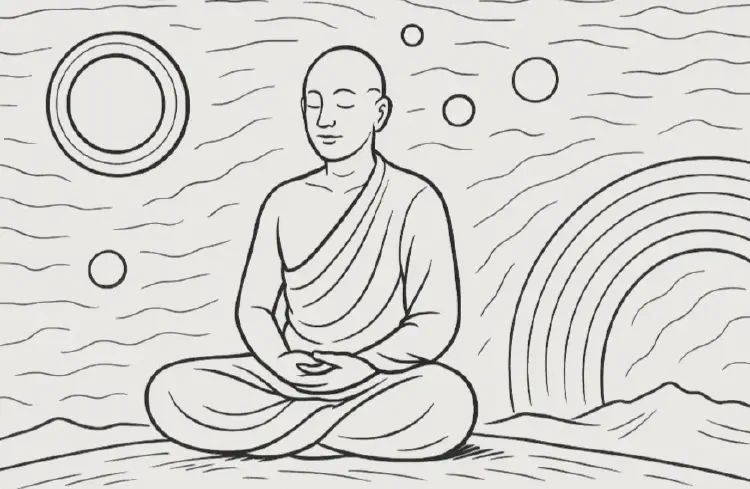
Tögal, or 'leap-over,' is one of the two central practices of the Menngagde series. While Trekchö emphasizes primordial purity, Tögal reveals spontaneous presence through visionary experiences.

Dzogchen offers profound instructions for death and dying, guiding practitioners to recognize awareness at the time of transition. Death becomes not an end but an opportunity for full realization.