Practicing vast openness
Longde practices emphasize spaciousness, pointing to the boundless quality of awareness. Practicing vast openness means dissolving limitations and resting in the infinite expanse of rigpa.
- Dzogchen Essentials
- 2 min read
Article 3 of 6 in Longde Practices/
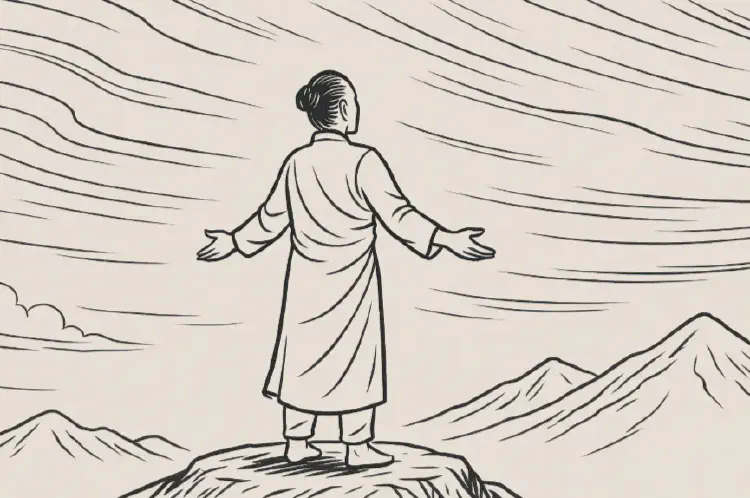
What is Vast Openness?
- Vast openness refers to the limitless, unobstructed nature of awareness.
- Unlike ordinary mind, which narrows and grasps at objects, rigpa is vast like space—free from center or boundary.
- Practicing vast openness trains the mind to release fixation and abide in this natural expanse.
How to Practice:
- Sit in a relaxed, upright posture.
- Allow the gaze to rest openly, often into space or sky.
- Instead of concentrating, relax into the expanse of awareness without grasping at thoughts or perceptions.
- When thoughts arise, let them dissolve naturally in the openness without interference.
Experiential Qualities:
- Boundlessness, like resting in infinite space.
- Clarity and vividness, free from mental dullness.
- Ease and freedom, where nothing obstructs awareness.
Why It Matters in Longde:
- Vast openness directly counters the mind’s habitual narrowing and fixation.
- It reveals that awareness itself is already spacious, not something to be created.
- Practicing openness strengthens the recognition that rigpa pervades all experiences.
Analogies in Dzogchen:
- Awareness as the sky—unlimited, clear, and unaffected by clouds.
- Awareness as space—it allows everything to arise yet is never altered by what appears.
Benefits of Practicing Vast Openness:
- Reduces attachment to thoughts, emotions, and sensory objects.
- Encourages effortless self-liberation of mental activity.
- Supports integration of awareness into both stillness and movement.
Summary: Practicing vast openness in Longde is about dissolving mental boundaries and resting in the infinite expanse of awareness. It reveals the natural spaciousness of rigpa, which embraces all phenomena without obstruction.