Posture and gaze techniques
In Longde (Space Series) practices of Dzogchen, posture and gaze are essential methods for evoking spaciousness and supporting recognition of awareness.
- Dzogchen Essentials
- 2 min read
Article 1 of 6 in Longde Practices/
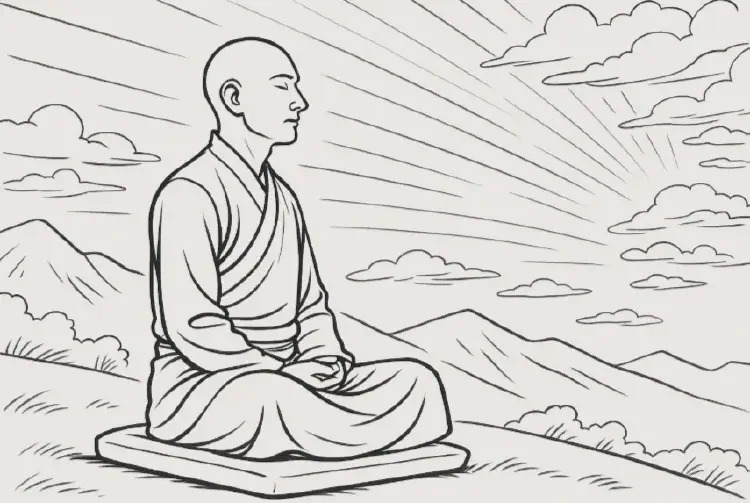
Role of Posture in Longde:
- The body is held upright, relaxed, and open—neither rigid nor slouched.
- Posture reflects the qualities of awareness: stability, openness, and balance.
- A common position is sitting with the spine straight, shoulders relaxed, and hands resting naturally.
- The body should feel like a mountain—solid yet effortless.
Gaze Techniques:
- Gaze is a powerful support in Longde, used to open awareness beyond fixation.
- Sky gazing: Looking into the vast, open sky mirrors the boundlessness of awareness.
- Soft gaze: Eyes remain open, unfocused, resting in the middle distance without grasping.
- Upward gaze: Sometimes directed slightly upward, symbolizing openness and lifting subtle energies.
- Non-fixation: The gaze should not cling to any object but remain relaxed and spacious.
How Posture and Gaze Work Together:
- Posture stabilizes the body, preventing dullness or agitation.
- Gaze expands awareness, cutting through habitual narrowing of perception.
- Together, they harmonize body and mind with the spacious nature of rigpa.
Practical Instructions:
- Sit comfortably with the spine upright.
- Relax the body completely, letting tension dissolve.
- Keep the eyes open, resting gaze in the space before you or into the sky.
- Allow awareness to merge with openness, without following thoughts or objects.
Benefits of These Techniques:
- Reduces mental constriction and restlessness.
- Evokes a sense of vastness and freedom.
- Supports self-liberation of thoughts by preventing fixation.
Summary: In Longde practices, posture and gaze are not rigid techniques but gateways into spacious awareness. By sitting naturally and resting the gaze in openness, practitioners align body, senses, and mind with the vast expanse of rigpa.