Use of sky gazing
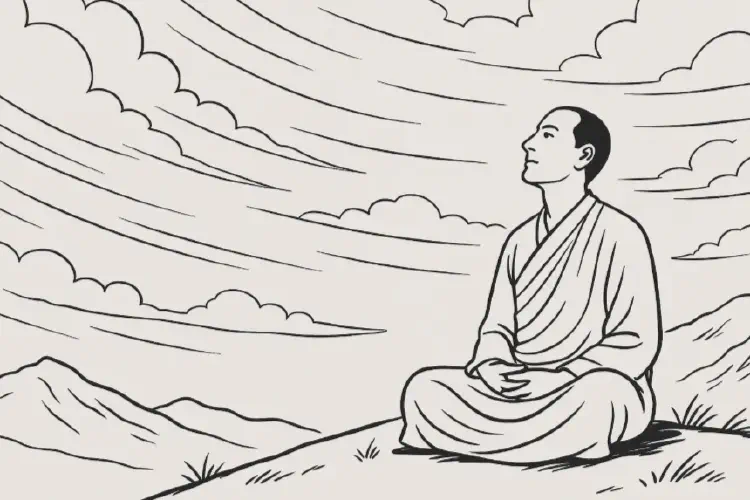
Sky gazing is one of the most distinctive practices of the Longde series. It harnesses the vastness of the sky as a direct support for recognizing and stabilizing awareness.
- Dzogchen Essentials
- 2 min read
Article 2 of 6 in Longde Practices/
Why the Sky?
- The sky symbolizes the boundless, unobstructed nature of rigpa.
- Just as the sky is not stained by clouds, awareness is never stained by thoughts or emotions.
- Looking into the open sky helps dissolve fixation and evoke vast spaciousness.
How to Practice Sky Gazing:
- Sit in a comfortable, upright posture, preferably outdoors with an open sky view.
- Keep the eyes open, gazing softly into the sky without focusing on any object.
- Relax the mind completely—do not chase clouds, thoughts, or visual phenomena.
- Allow awareness to merge with the vast openness of the sky.
What Happens in Practice:
- Thoughts and emotions dissolve naturally, like clouds dissolving in the sky.
- Awareness expands, no longer confined by fixation on objects or concepts.
- A sense of freedom, clarity, and boundless presence emerges.
Important Instructions from Masters:
- Do not strain the eyes or force concentration.
- Avoid turning sky gazing into visualization—simply rest in natural openness.
- Recognize that the sky is an external support, but the true spaciousness is your own awareness.
Benefits of Sky Gazing:
- Cuts through the narrowness of ordinary perception.
- Supports direct recognition of rigpa as vast, open, and unchanging.
- Encourages spontaneous self-liberation of thoughts.
Summary: Sky gazing is not about looking at the sky but about using its vastness to recognize the equally vast nature of mind. It is a powerful Longde method for opening awareness into boundless spaciousness.