Micro-practices during work or movement
Dzogchen practice does not require withdrawing from daily life. Micro-practices—short, simple recognitions of awareness—can be woven into ordinary activities, especially during work or movement.
- Dzogchen Essentials
- 2 min read
Article 4 of 6 in Daily Practice Routines/
What Are Micro-Practices?
- Brief moments of recognizing rigpa inserted into everyday actions.
- They require no special setting, posture, or ritual—only a shift in attention.
- They transform routine moments into opportunities for awakening.
Examples of Micro-Practices:
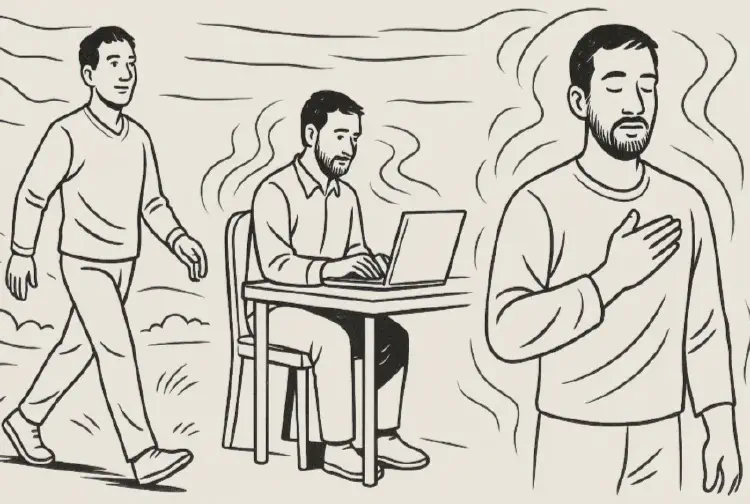
- While Walking: Notice the rhythm of steps, then relax into the awareness in which walking unfolds.
- During Work: Pause between tasks, recognize awareness, and then continue activity.
- With Breath: Take one conscious breath, resting in rigpa, before resuming activity.
- In Conversations: Notice awareness while listening and speaking, rather than being swept away by reactivity.
Why They Are Powerful:
- They prevent the compartmentalization of practice as something separate from life.
- They cultivate continuity—awareness is remembered many times throughout the day.
- They turn distractions and busyness into supports for practice.
How to Apply Practically:
- Use natural pauses (before sending an email, opening a door, or taking a sip of water) as cues.
- Integrate reminders such as sounds, bells, or phone notifications to trigger recognition.
- Approach micro-practices playfully, not as heavy obligations.
Benefits:
- Builds stability in recognition without requiring long sessions.
- Infuses awareness into daily activities, relationships, and responsibilities.
- Strengthens confidence that rigpa is accessible in any circumstance.
Summary: Micro-practices during work or movement are brief recognitions of awareness woven into daily life. By using ordinary moments as reminders, practitioners transform busyness itself into the path of Dzogchen.