Using reminders and bells
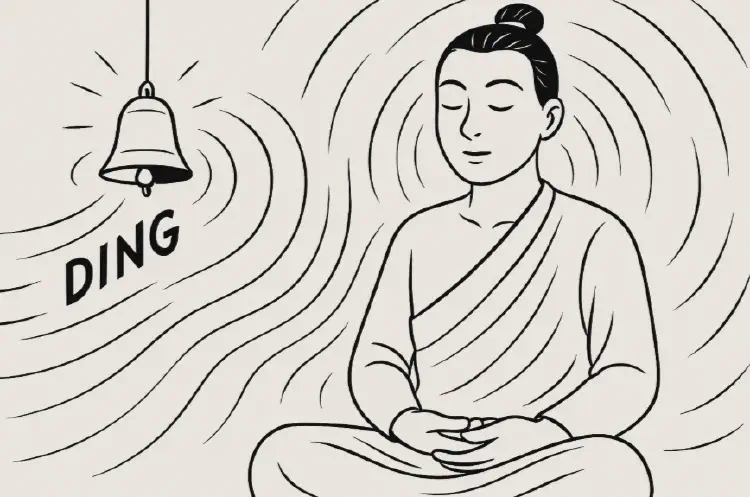
Because distraction is strong and habits are deep, Dzogchen practitioners often use reminders—both natural and intentional—to recall awareness throughout the day. Bells and other cues serve as supports for continuity of rigpa.
- Dzogchen Essentials
- 2 min read
Article 5 of 6 in Daily Practice Routines/
Why Reminders Are Helpful:
- Awareness is ever-present, but forgetfulness quickly pulls the mind back into dualistic habits.
- Simple cues can break the stream of distraction and return the practitioner to recognition.
- Reminders transform ordinary environments into fields of practice.
Traditional Reminders:
- Temple bells, conch shells, or ritual sounds were historically used in monasteries to bring practitioners back to presence.
- Prayer flags, stupas, or sacred images acted as visual cues to recall awareness.
Modern Reminders:
- A phone chime or mindfulness app that rings periodically.
- Sticky notes, symbols, or short phrases placed where they are frequently seen.
- Using natural cues—like hearing a bird, passing through a doorway, or seeing the sky—as triggers to rest in awareness.
How to Practice with Reminders:
- When a bell or reminder sounds, pause whatever you are doing.
- Take one conscious breath and relax into awareness.
- Recognize thoughts and sensations as self-liberating appearances.
- Continue activity without breaking the flow of presence.
Benefits of Using Reminders:
- Prevents long lapses of forgetfulness.
- Builds a rhythm of returning to awareness many times a day.
- Makes awareness inseparable from daily routines rather than limited to formal sessions.
Dzogchen Insight:
- The reminder is not special—the sound or symbol itself is ordinary.
- What matters is how it points the mind back to what is extraordinary: the recognition of rigpa.
Summary: Using reminders and bells helps practitioners maintain continuity of awareness throughout the day. Simple sounds, symbols, or natural cues transform ordinary life into a stream of recognition, ensuring Dzogchen practice remains alive and unbroken.