Creating conducive practice environment
While Dzogchen emphasizes that awareness is present everywhere, creating a supportive environment helps practitioners cultivate stability, inspiration, and continuity in their practice.
- Dzogchen Essentials
- 2 min read
Article 6 of 6 in Preparation and Ground/
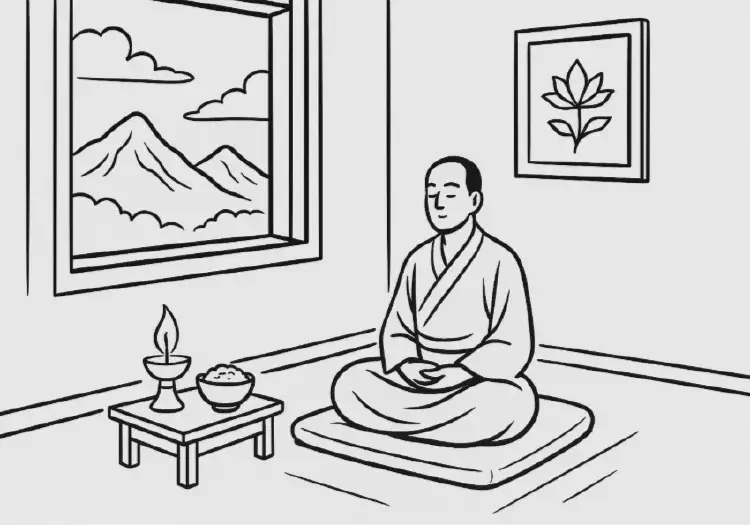
Outer Environment:
- A quiet, clean, and uncluttered space minimizes distractions and encourages clarity.
- Many practitioners set up a small altar with representations of the Buddha, Dharma, and Sangha, as well as offerings like water bowls or butter lamps.
- Natural settings—mountains, sky, or open landscapes—are especially conducive, as they mirror the spaciousness of awareness.
Inner Environment (Mindset):
- Cultivating motivation and bodhicitta ensures the inner atmosphere of practice is compassionate and altruistic.
- Entering practice with reverence and devotion helps open the mind to receiving the blessings of transmission.
- A relaxed but attentive attitude is essential—neither too rigid nor too distracted.
Supportive Conditions:
- Regular times for practice create rhythm and consistency.
- Reducing unnecessary busyness or overstimulation allows for deeper settling.
- Keeping ethical discipline ensures fewer regrets or disturbances during meditation.
Practical Suggestions:
- Choose a specific corner of your home for practice, keeping it tidy and reserved for spiritual work.
- Use subtle reminders (images, candles, prayer flags) to inspire awareness.
- If possible, spend occasional time in nature—sky gazing or meditating in open spaces resonates with Dzogchen methods.
- Balance solitude with supportive community (sangha) to encourage steady progress.
Why It Matters for Dzogchen:
- Although awareness can be recognized anywhere—even in the midst of activity—a conducive environment helps beginners avoid being overwhelmed by distractions.
- It creates a container where glimpses of rigpa can deepen into stable recognition.
In essence, a conducive practice environment is not about luxury or isolation but about cultivating simplicity, inspiration, and supportive conditions that allow awareness to reveal itself naturally.