Balancing solitude and community practice
Dzogchen values both solitary practice and engagement with community. Each offers unique benefits, and balance between the two supports integration of awareness into life.
- Dzogchen Essentials
- 2 min read
Article 5 of 6 in Integration into Life/
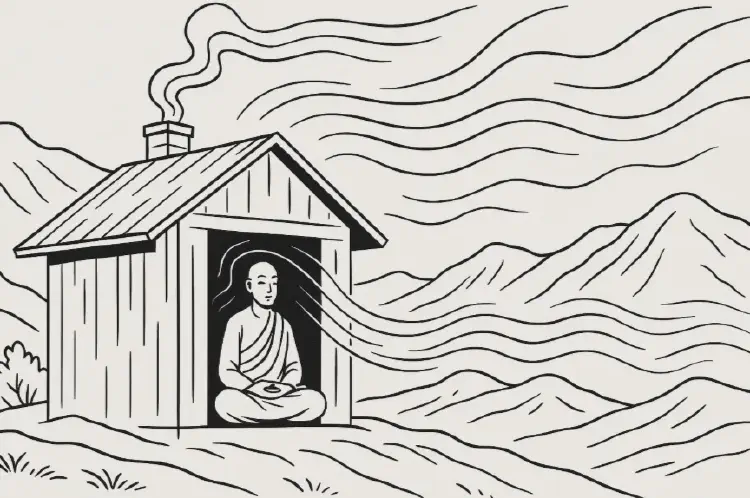
Value of Solitude:
- In solitude, distractions are fewer, allowing deeper stabilization of awareness.
- Retreat environments support continuous recognition of rigpa without worldly interruptions.
- Solitude encourages facing inner habits directly, without external escape routes.
Value of Community (Sangha):
- Practicing with others fosters mutual encouragement and accountability.
- Community provides opportunities to express compassion and integrate awareness in relationships.
- Sangha preserves and transmits authentic teachings, ensuring connection to lineage.
Balancing Both Approaches:
- Alternate Periods: Spend time in solitude to deepen recognition, then return to community to test and integrate stability.
- Daily Life Integration: Even when living with family or community, carve out short moments of solitary reflection.
- Awareness of Tendencies: Solitude can become isolation if misused; community can become distraction if not mindful. Balance prevents extremes.
Dzogchen Insight:
- Awareness is not dependent on environment. Solitude and community are both expressions of the same rigpa.
- The key is continuity of recognition—whether alone in retreat or engaged in daily life.
Benefits of Balance:
- Solitude provides depth and clarity.
- Community provides warmth, compassion, and opportunities for applying practice in relationships.
- Together, they strengthen both stability and integration of awareness.
Summary: Balancing solitude and community practice allows Dzogchen practitioners to deepen recognition in quiet retreat while integrating awareness in the complexities of human interaction. Both are vital supports for embodying rigpa fully in life.