Community and sangha support
In Dzogchen, the sangha (community of practitioners) is a vital support. Practicing within community reinforces awareness, provides encouragement, and connects practitioners to authentic lineage.
- Dzogchen Essentials
- 2 min read
Article 5 of 6 in Practical Tips and Guidance/
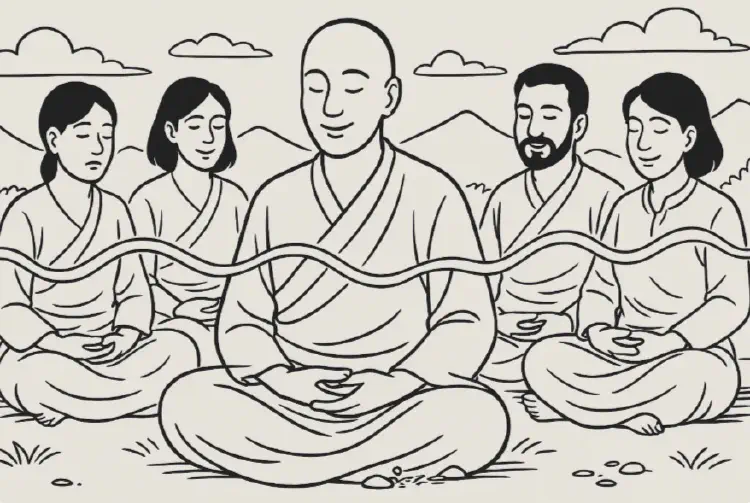
Why Sangha Matters:
- Practicing alone can lead to isolation or stagnation; community provides balance and encouragement.
- Sangha is a field for practicing awareness in relationships and daily interactions.
- It preserves teachings and ensures continuity of authentic transmission.
Forms of Community Support:
- Group meditation sessions that strengthen stability in recognition of rigpa.
- Retreats and teachings where practitioners receive guidance together.
- Informal gatherings to share experiences, questions, and mutual encouragement.
Benefits of Practicing with Sangha:
- Mutual Encouragement: Seeing others practicing diligently inspires perseverance.
- Collective Energy: Practicing together generates a strong field of awareness.
- Practical Help: Sangha members support each other through challenges in life and practice.
- Lineage Connection: Community ties link individuals to authentic teachings and teachers.
Integration into Dzogchen Practice:
- Sangha is not only for group practice—it extends into daily life as ongoing reminders of awareness.
- Practicing awareness in community interactions tests and strengthens stability.
- Compassion naturally grows through shared connection and mutual care.
Dzogchen Insight:
- Awareness is unchanging whether alone or in community, but sangha provides mirrors that reflect and refine recognition.
- The sangha is often called a “jewel” because of its irreplaceable role in sustaining the path.
Summary: Community and sangha support are vital for Dzogchen practitioners. Practicing within a community strengthens recognition, deepens connection to lineage, and provides mutual encouragement, ensuring that awareness is integrated into both solitude and shared life.