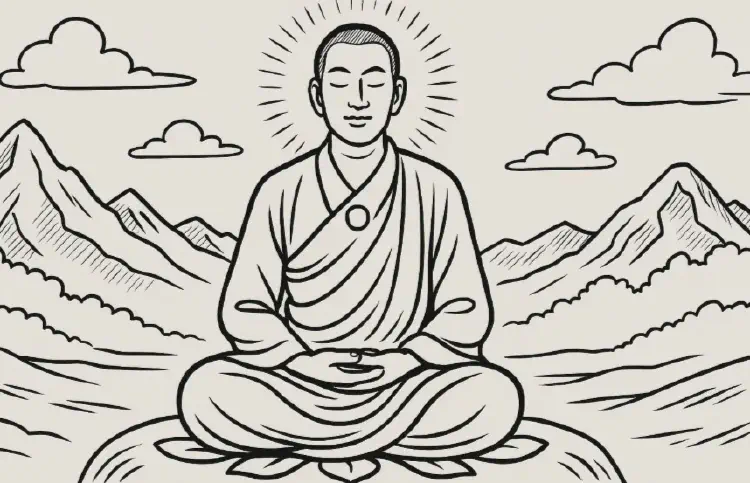
Settling the body, speech, and mind
Before entering the subtler stages of Dzogchen practice, practitioners first learn to settle body, speech, and mind into a state of relaxed stability. This creates the ground for recognizing awareness.
Before entering the subtler stages of Dzogchen practice, practitioners first learn to settle body, speech, and mind into a state of relaxed stability. This creates the ground for recognizing awareness.
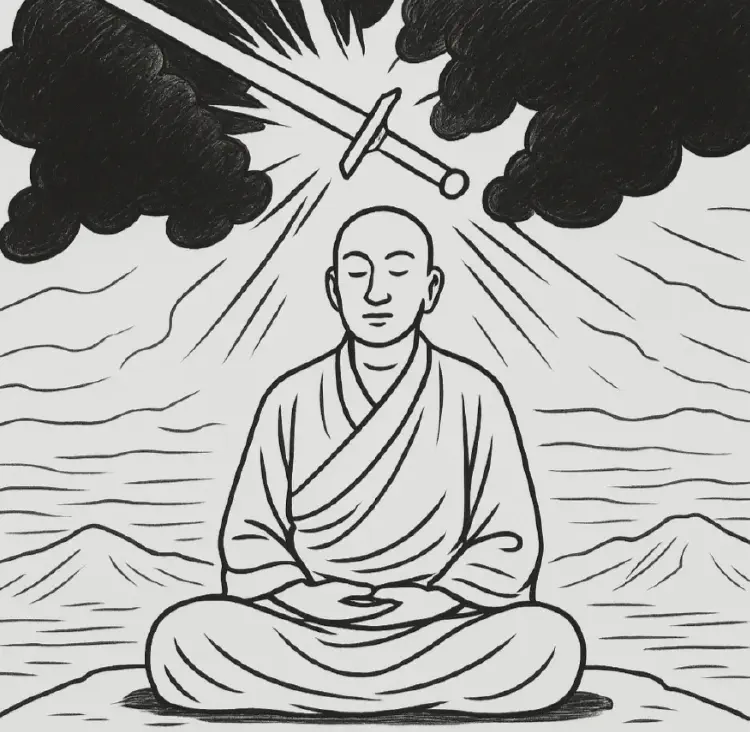
Trekchö, often translated as 'cutting through,' is one of the two central practices of Menngagde. It directly reveals the primordial purity of awareness by cutting through the rigidity of grasping and conceptual elaboration.
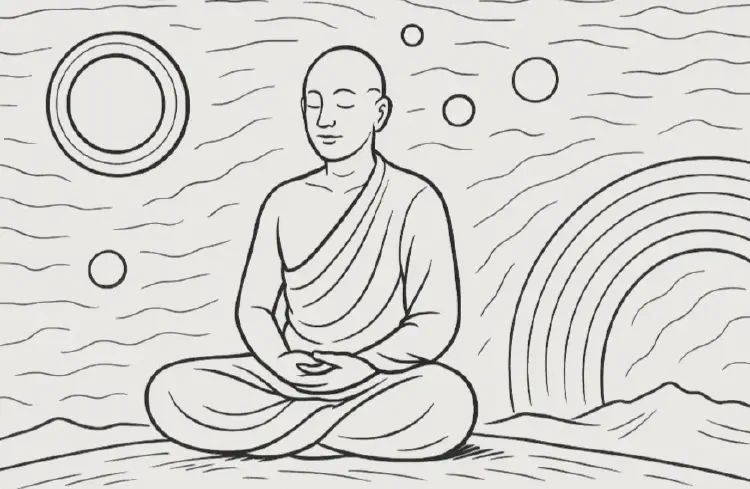
Tögal, or 'leap-over,' is one of the two central practices of the Menngagde series. While Trekchö emphasizes primordial purity, Tögal reveals spontaneous presence through visionary experiences.

The rainbow body is one of the most profound teachings in Dzogchen. It describes the dissolution of the practitioner’s body into light at the culmination of Tögal practice and realization of rigpa.
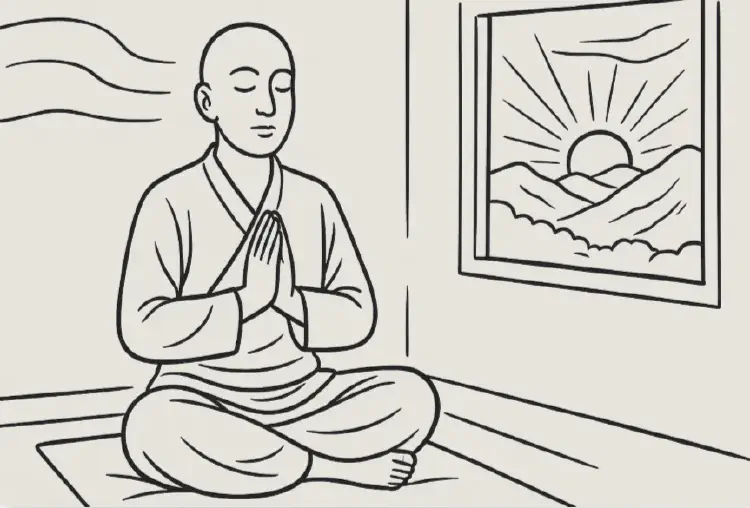
How one begins the day strongly influences awareness throughout the day. In Dzogchen, the morning routine centers on awakening mindfully and setting an intention rooted in awareness and compassion.
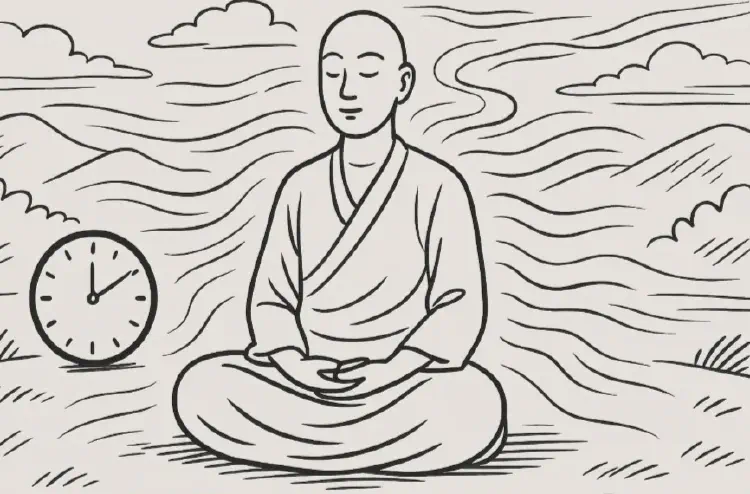
Dzogchen practice is often described as 'short sessions, many times.' Rather than striving for long meditation periods, the emphasis is on frequent glimpses of natural awareness throughout the day.