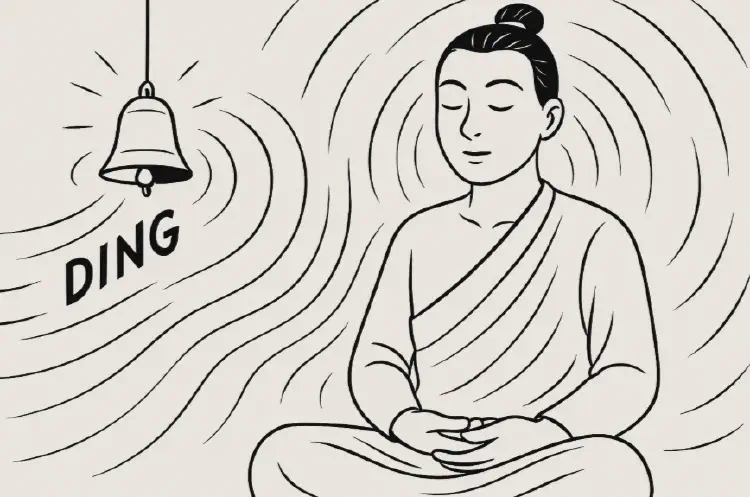
Because distraction is strong and habits are deep, Dzogchen practitioners often use reminders—both natural and intentional—to recall awareness throughout the day. Bells and other cues serve as supports for continuity of rigpa.
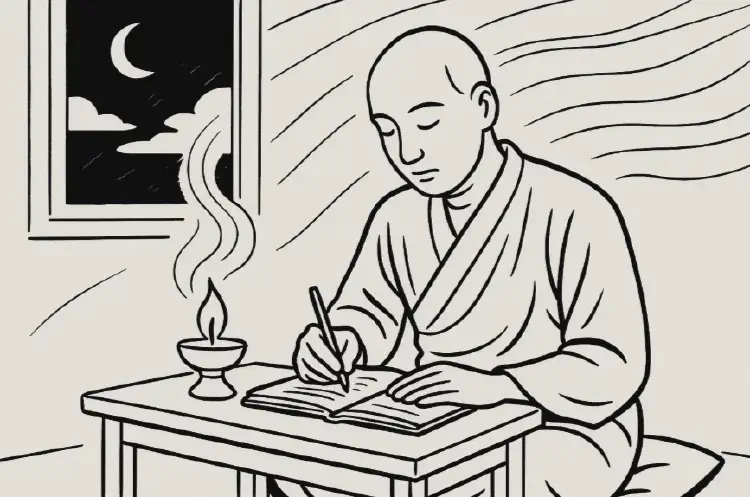
Evening reflection and dedication of merit
How one concludes the day is as important as how one begins it. In Dzogchen, evening reflection and dedication of merit seal daily practice, deepening awareness and aligning activity with compassion.
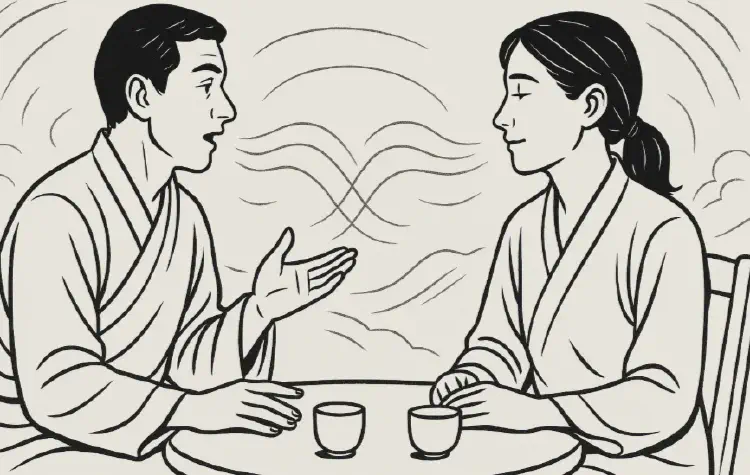
Awareness in speech, interactions, and relationships
Dzogchen practice is not separate from daily life. Speech, interactions, and relationships are seen as natural fields for recognizing and embodying awareness.
Breathing exercises and channels
Although Dzogchen emphasizes direct recognition of awareness, supportive practices such as breathing and working with subtle channels help clear obstacles and harmonize body, speech, and mind.
Simple yogic movements for energy flow
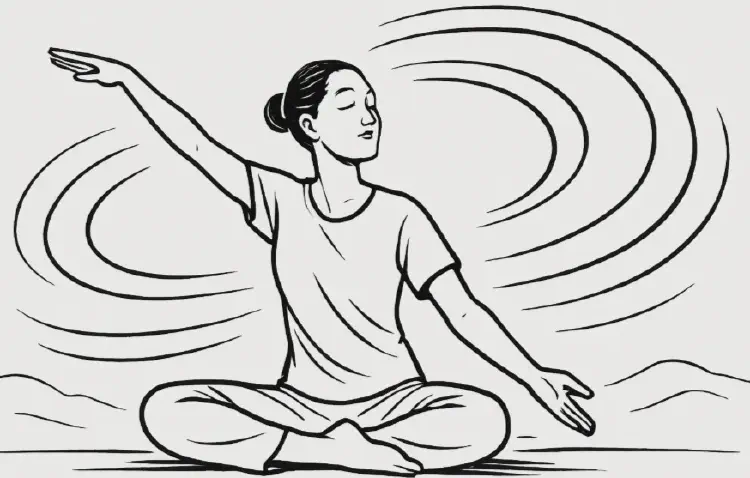
In Dzogchen, supportive yogic movements help harmonize body and energy, removing obstacles that obscure awareness. These practices, often drawn from Tibetan yogas such as trülkhor, complement meditation by balancing subtle energies.
Dream and sleep yoga foundations
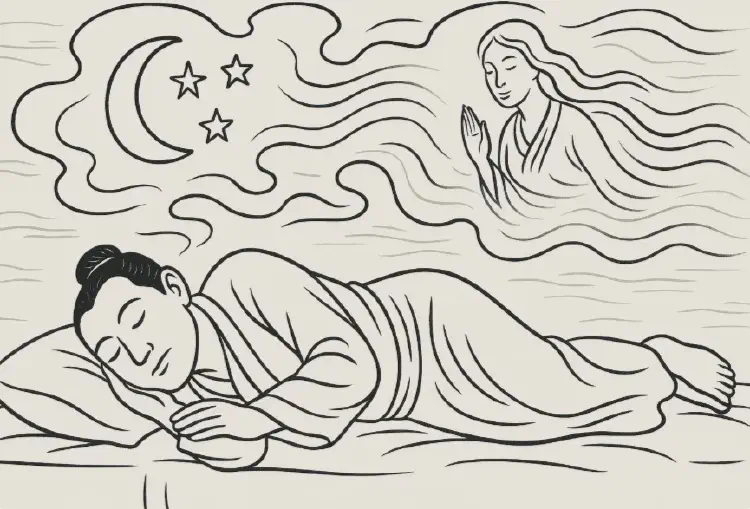
Dream and sleep yoga are supportive practices in Dzogchen that extend awareness into the night. They prepare practitioners to recognize rigpa during dreaming, deep sleep, and ultimately the transition of death.